Your Smartphone Is a Geopolitical Warzone in 2026: China, Taiwan, Chips & Cobalt Explained
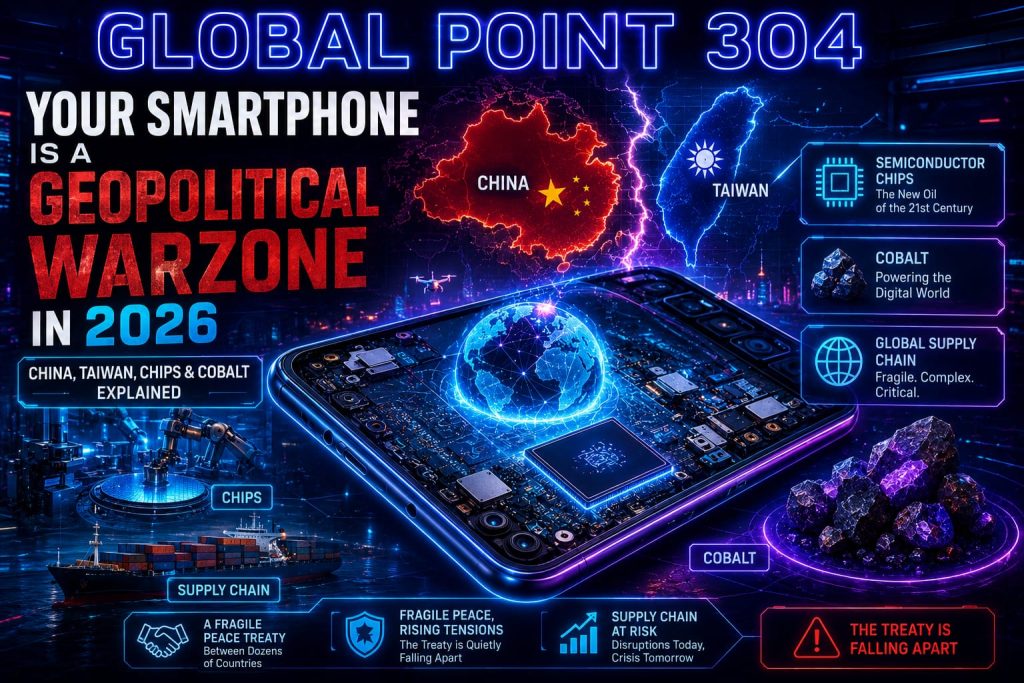
Every time you unlock your phone, you are touching a battlefield. It does not look like one. There is no smoke, no noise, no headline flashing on your lock screen. But the truth is simple: your smartphone is a geopolitical warzone, and almost nobody realizes it while scrolling through their feed.
The device in your pocket is built from materials and technology controlled by a handful of countries locked in a slow-motion power struggle. China, Taiwan, the United States, and a few mineral-rich nations in Africa each hold a piece of the puzzle that decides whether your next phone gets cheaper, more expensive, delayed, or redesigned entirely.
This is why saying your smartphone is a geopolitical warzone is not an exaggeration. It is a description of how modern technology actually works in 2026. Behind every camera upgrade and every battery improvement sits a chain of chips, minerals, and political decisions that most buyers never see.
Why Your Smartphone Is a Geopolitical Warzone Today
To understand why your smartphone is a geopolitical warzone, you have to look past the glass screen and into the supply chain underneath it. A single smartphone contains processors from Taiwan, rare earth magnets refined mostly in China, cobalt mined in Central Africa, and software written under rules set by Washington and Beijing.
None of these pieces exist in isolation. When Taiwan’s chip factories face pressure, your phone’s brain is at risk. When China tightens rare earth exports, the tiny magnets inside your speaker and camera motor become harder to source. When cobalt supply chains are disrupted, battery prices shift worldwide.
That is the core reason your smartphone is a geopolitical warzone rather than just a shopping decision. Buying a phone in 2026 means participating, whether you like it or not, in a global contest between superpowers.
Global Point 304 has been tracking this shift closely, because our readers in Pakistan feel these effects directly through phone prices, PTA taxes, and import costs. Understanding why your smartphone is a geopolitical warzone helps you make smarter buying decisions instead of reacting to price shocks after they happen.
Taiwan: The Island That Decides If Your Phone Turns On
If you want one single reason why your smartphone is a geopolitical warzone, start with Taiwan. A single company on that island, TSMC, produces the vast majority of the world’s most advanced chips, the same chips that power your phone’s processor, camera engine, and AI features.
Analysts estimate TSMC controls around seventy percent of global foundry revenue and over ninety percent of leading-edge chip production at the most advanced nodes, according to recent investor risk modeling. That level of concentration means one island effectively decides the pace of smartphone innovation for the entire planet.
This is precisely why your smartphone is a geopolitical warzone every time tensions rise across the Taiwan Strait. Military drills, shipping disruptions, or even energy shortages on the island can ripple into chip shortages within weeks, because global inventories of advanced chips typically cover only a few weeks of demand.
Reports from early 2026 highlighted how conflict in the Middle East and disruptions to shipping lanes were already straining Taiwan’s energy imports, which directly power its chip fabs, as detailed by market analysis on Taiwan’s energy exposure. When energy gets tight in Taiwan, chip production slows, and your smartphone is a geopolitical warzone becomes more than a headline, it becomes a delay on your next upgrade.
Some analysts describe Taiwan’s chip dominance as a silicon shield, the idea that no country would dare disrupt an island so critical to the global economy. But that shield cuts both ways. The more irreplaceable Taiwan becomes, the higher the stakes if anything ever goes wrong there, which is exactly why your smartphone is a geopolitical warzone whenever this topic makes global news.
For readers who want to see how this chip race plays out in real products, Global Point 304 previously compared Samsung Galaxy AI vs Apple Intelligence, where the underlying processors are all manufactured through this exact same fragile Taiwanese supply chain.
China’s Rare Earth Weapon: Gallium, Germanium and the Silent Squeeze
Chips need more than factories. They need raw materials, and this is the second reason your smartphone is a geopolitical warzone. China controls close to ninety percent of global rare earth processing capacity, according to 2026 geopolitical resource analysis, giving it enormous leverage over the materials used in your phone’s magnets, speakers, and camera motors.
Gallium is a particularly important example. It is used in the high frequency chips that support 5G connections in your phone, and China’s tightening export licensing on gallium has already rattled semiconductor supply chains this year, based on reporting on Japan’s 2026 rare earth crisis.
In late 2025, Beijing expanded export controls covering rare earth production technology, mining, smelting, and magnetic materials, with case-by-case approval required for advanced chips at 14 nanometers or below, as confirmed by Reuters coverage of the tightened rules. These controls were paused for a year following talks between Washington and Beijing, but the underlying tension never disappeared.
This back and forth is a textbook example of why your smartphone is a geopolitical warzone. One month rare earth shipments flow normally, the next month a licensing review quietly stalls, and manufacturers scramble to secure alternative sources before production lines slow down.
Your smartphone is a geopolitical warzone in this sense because you never see the negotiation happening, yet the outcome eventually shows up as a price change or a delayed product launch on the shelf of your local mobile market.
Cobalt and the Congo: The Battery Behind the Battle
No discussion of why your smartphone is a geopolitical warzone is complete without cobalt. This metal sits inside the battery of nearly every smartphone on earth, and the Democratic Republic of Congo supplies around seventy percent of the world’s cobalt, according to research covered by Chemistry World’s cobalt market report.
In 2025, the DRC suspended cobalt exports entirely to influence global prices, later replacing the ban with strict export quotas capping annual shipments for 2026 and 2027, as reported by S&P Global’s market intelligence coverage. This single policy decision by one country reshaped pricing expectations for batteries worldwide.
Your smartphone is a geopolitical warzone in the most literal sense here, because journalists and researchers have documented harsh labor conditions in artisanal cobalt mines that feed into global battery supply chains, a reality explored in depth in the book covered by the Los Angeles Review of Books.
Battery manufacturers have responded by developing cobalt-reduced and cobalt-free battery chemistries, partly to cut costs and partly to reduce dependence on a single unstable region. Still, high performance phone batteries remain more resistant to this shift than electric vehicle batteries, keeping cobalt demand resilient even as prices swing.
This is another layer of proof that your smartphone is a geopolitical warzone, connecting a mining pit in Central Africa to the battery percentage you check every morning before leaving home.
The US-China Chip War: Export Bans, Blacklists and Countermoves
Layer on top of Taiwan and cobalt a direct confrontation between Washington and Beijing, and you get the clearest picture yet of why your smartphone is a geopolitical warzone. The United States has steadily expanded restrictions on advanced chip exports to China, targeting chip design software, lithography tools, and AI processors.
China responded with its own licensing requirements on rare earth oxides, metals, and magnet products, escalating tensions that eventually forced emergency negotiations, as documented in analysis from War on the Rocks’ security policy coverage. Both sides agreed to a temporary one-year suspension of their toughest measures, but the underlying rivalry remains fully intact.
Even smuggling has become part of this story. United States prosecutors charged individuals with conspiring to move billions of dollars worth of restricted chips through unauthorized channels, a case reported by Sourceability’s supply chain analysis. This shows how determined both sides are to control who gets access to advanced chip technology.
Your smartphone is a geopolitical warzone because these restrictions do not stay confined to China and the United States. Every phone brand sourcing chips, memory, or manufacturing equipment gets caught somewhere inside this expanding web of rules, licenses, and blacklists.
What Happens When the Warzone Turns Hot: Scenarios for 2026 and Beyond
Risk analysts have started modeling what happens if the tension around Taiwan escalates into an actual blockade or military conflict. One investor-grade model estimates global GDP could fall between zero point five and ten percent depending on how long a disruption lasts, according to shock modeling research on Taiwan’s semiconductor risk.
This is the scenario that keeps supply chain planners awake at night, and it is the clearest evidence yet that your smartphone is a geopolitical warzone rather than a simple consumer product. A prolonged disruption could delay flagship phone launches by months and push prices sharply higher across every brand.
Some analysts believe China would more likely attempt a quarantine or blockade rather than a full invasion, based on scenario planning covered by Mapshock’s geopolitical risk briefing. Even a quarantine scenario would be enough to choke advanced chip shipments to smartphone makers worldwide within weeks.
Whether or not conflict ever fully materializes, the pattern is clear. Your smartphone is a geopolitical warzone that reacts to every prediction market shift, every naval exercise, and every diplomatic meeting between major powers, long before any of it reaches your local phone shop.
How the Smartphone Geopolitical Warzone Hits Pakistani Consumers
For readers in Pakistan, your smartphone is a geopolitical warzone in a very practical sense. Import duties, PTA taxation, and currency fluctuations already push phone prices higher than in many other markets, and global chip shortages or cobalt price spikes only add another layer of cost on top.
When TSMC output slows or rare earth exports tighten, phone brands typically protect their premium flagship supply first, which often means budget and mid-range models sold widely across Pakistan see delayed availability or quiet price adjustments. Your smartphone is a geopolitical warzone here because the middle class buyer usually absorbs the shock last but hardest.
Currency depreciation compounds this effect. When global chip prices rise due to geopolitical tension, and the rupee simultaneously weakens against the dollar, Pakistani consumers face a double impact that buyers in stronger currency markets rarely feel to the same degree.
Understanding that your smartphone is a geopolitical warzone gives Pakistani buyers a real advantage. Instead of assuming a price hike is simply local greed or seasonal demand, you can recognize when it traces back to a chip shortage in Taiwan or a mineral quota decision in the Congo.
Companies Fighting Back: Diversification, Reshoring and the New Supply Map
Smartphone makers and governments are not standing still while your smartphone is a geopolitical warzone plays out. TSMC has been expanding production capacity outside Taiwan, including new facilities in Arizona, specifically to reduce the world’s dependence on a single geography.
Cobalt buyers are diversifying too, with new projects gaining funding in Canada and the United States to reduce reliance on the Democratic Republic of Congo, alongside a broader industry shift toward cobalt-reduced battery chemistries. Indonesia has also expanded cobalt output, gradually easing some of the pressure created by DRC export quotas.
On the chip side, countries are racing to build their own fabrication capacity, and companies are qualifying secondary suppliers years in advance because contracts signed today often determine chip availability two years later. This is a direct response to the reality that your smartphone is a geopolitical warzone with no quick fix.
None of these efforts will fully insulate your smartphone is a geopolitical warzone dynamic in the near term. Diversification takes years, qualification takes years, and geopolitics rarely waits for supply chains to catch up.
What You Can Do as a Smart Consumer
You cannot control Taiwan Strait tensions or Congo export quotas, but you can make smarter decisions once you accept that your smartphone is a geopolitical warzone. Avoid rushing to upgrade the instant a new flagship launches, since early production runs are often the most exposed to supply disruptions and price volatility.
Watch for signs of chip or battery material shortages in tech news before making a big purchase. If reports mention rare earth licensing delays or cobalt export restrictions, expect prices on premium devices to firm up rather than drop in the following months.
Consider mid-cycle purchases instead of day-one buying. Once your smartphone is a geopolitical warzone story settles for a season, supply chains stabilize and better deals typically appear a few months after launch.
Global Point 304’s Continuing Coverage
Global Point 304 will keep tracking why your smartphone is a geopolitical warzone as this story develops through 2026. From chip war updates to battery material shifts, our Technology section is committed to translating complex global supply chain news into practical guidance for Pakistani readers and buyers everywhere.
We previously broke down how these same processors show up in real devices in our comparison of Samsung Galaxy AI vs Apple Intelligence, and we will continue connecting global chip politics to the phones you actually consider buying.
Conclusion
Your smartphone is a geopolitical warzone built from Taiwanese silicon, Chinese rare earths, and Congolese cobalt, all shaped by decisions made in Washington and Beijing far from any showroom. The next time you unlock your phone, remember that its journey to your hand passed through some of the most contested territory on the planet.
اردو میں یہ مضمون پڑھنے کے لیے ہماری Your Smartphone Is a Geopolitical Warzone (Urdu) پوسٹ ملاحظہ کریں۔ Read the other language version: Your Smartphone Is a Geopolitical Warzoneآپ کا اسمارٹ فون ایک جنگی میدان ہے — چین، تائیوان اور کوبالٹ
Staying informed about why your smartphone is a geopolitical warzone will only become more valuable as tensions between major powers continue shaping prices, availability, and innovation through 2026 and beyond.