Samsung vs Google Pixel Camera Test (2026): Which Takes Better Photos & Videos?
Category: Technology | Updated 2026
If you have been searching for an honest Samsung vs Google Pixel Camera comparison in 2026, you have landed at the right place. Every year, millions of smartphone buyers around the world — including here in Pakistan — struggle to decide between Samsung’s camera-packed flagships and Google’s software-driven Pixel lineup. The Samsung vs Google Pixel Camera debate has become one of the hottest topics in mobile photography, and 2026 has made the competition tighter than ever.
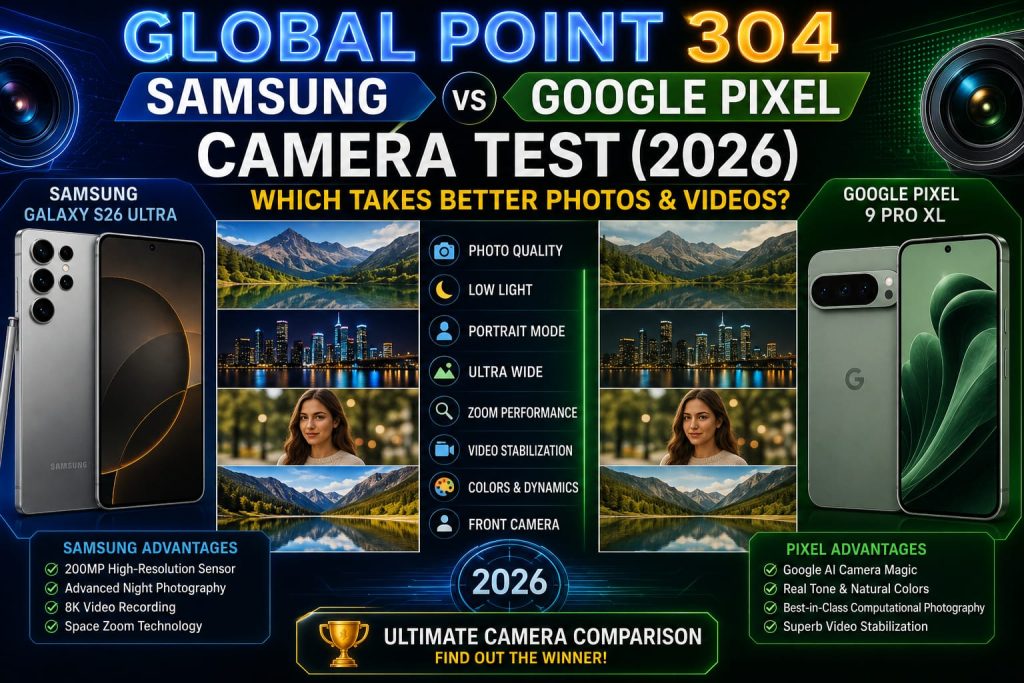
In this detailed Samsung vs Google Pixel Camera test, we break down photo quality, video performance, low-light results, zoom capability, and AI-powered features of Samsung’s Galaxy S26 Ultra against Google’s Pixel 10 Pro and Pixel 10 Pro XL. Whether you are a content creator, a vlogger, or simply someone who wants the best phone camera for family photos, this Samsung vs Google Pixel Camera guide will help you make a confident, informed decision.
At Global Point 304, we have already covered related comparisons such as our detailed breakdown of Samsung One UI vs Apple iOS, and today we continue that same spirit of unbiased, research-backed technology journalism with this Samsung vs Google Pixel Camera face-off.
Samsung vs Google Pixel Camera: Hardware Specifications
Before jumping into real-world photo results, any serious camera comparison must start with the hardware itself, because sensor size, aperture, and lens design shape everything that follows.
Samsung Galaxy S26 Ultra camera setup:
- 200MP primary sensor, f/1.4 aperture
- 50MP ultrawide lens, 120-degree field of view
- 50MP telephoto lens with 5x optical zoom (new ALoP design)
- 10MP telephoto lens with 3x optical zoom
Google Pixel 10 Pro / Pro XL camera setup:
- 50MP main sensor, f/1.68–1.7 aperture, larger 1.2-micron pixels
- 48MP ultrawide lens with Macro Focus
- 48MP telephoto lens with 5x optical zoom
On paper, the hardware race in this Samsung vs Google Pixel Camera matchup looks like a mismatch in Samsung’s favor thanks to its four-lens system and massive 200MP resolution. However, megapixels alone rarely decide which flagship wins — sensor size, processing power, and computational photography matter just as much, if not more.
Daylight Photo Quality: Samsung vs Google Pixel Camera
In good daylight, most flagship phones perform well, but a close look at these two camera systems reveals clear stylistic differences. Samsung’s Galaxy S26 Ultra tends to boost saturation and contrast, producing punchy, vibrant images that look great on social media straight out of the camera. Google’s Pixel, on the other hand, leans toward a flatter, more natural and neutral color profile that many photography enthusiasts prefer for accuracy.
When it comes to skin tones, the difference between the two flagships becomes obvious — Samsung renders warmer, slightly saturated tones, while Pixel keeps things closer to real life. Sharpness at 2x zoom generally favors Samsung, though results can vary depending on lighting conditions.
For wide-angle shots, this comparison shows Samsung’s ultrawide lens producing brighter, more detailed results, while Google’s ultrawide camera remains solid but slightly less vibrant in comparison.
Low-Light and Night Photography: Samsung vs Google Pixel Camera
Night photography is where the rivalry between these two flagships gets genuinely interesting. Google’s Night Sight has long been considered the gold standard of computational night photography, and the Pixel 10 Pro continues that legacy with consistent exposure, strong contrast, and minimal noise in dark environments.
Samsung has closed the gap significantly this year, thanks to the wider f/1.4 aperture on the main sensor, which allows more light to hit the sensor before any software processing kicks in. Low-light shots from the Galaxy S26 Ultra now show less noise and better detail retention than previous generations.
Still, in this night-mode test, Google’s software-driven approach to noise reduction and dynamic range gives it a slight consistency advantage, especially in extreme low-light or mixed-lighting scenes such as indoor restaurants or street photography at night.
Zoom and Telephoto: Samsung vs Google Pixel Camera
Zoom is one area where this comparison clearly tilts toward Samsung. The Galaxy S26 Ultra’s dual telephoto system allows for both 3x and 5x optical zoom, extending to a genuinely usable 30x zoom before quality drops off noticeably. Google’s Pixel 10 Pro XL relies on a single 5x telephoto lens, meaning anything below 5x is a digital crop rather than a true optical shot.
That said, Samsung’s secondary 10MP 3x lens is starting to feel dated, with less detail than the Pixel’s cropped 3x shots in certain lighting.
Portrait Mode: Samsung vs Google Pixel Camera
For portraits, the choice between these two flagships comes down to preference. Samsung produces punchier, social-media-ready portraits with smoother skin and richer background blur. Google’s Pixel favors a more realistic, less processed look with accurate edge detection around hair and glasses.
Video Recording: Samsung vs Google Pixel Camera
In 4K video, Samsung has the edge for stabilization and dynamic range, particularly in bright outdoor conditions. Google’s Pixel continues to shine in color science and audio processing, making it a strong choice for vloggers who prioritize natural tones over stabilization.
AI Camera Features: Samsung vs Google Pixel Camera
No modern flagship camera comparison is complete without discussing AI. Samsung’s Galaxy AI brings features like Generative Edit, Best Face, and instant translation overlays directly into the camera app. Google’s Tensor G5 chip, powering the Pixel 10 series, focuses on Best Take, Magic Eraser, and real-time computational adjustments that happen before the shutter is even pressed.
In terms of raw AI processing speed, the gap has narrowed, but Google still holds a slight software edge due to its tight integration between Tensor G5 and the Pixel camera pipeline.
Final Verdict: Samsung vs Google Pixel Camera
So who wins this camera showdown? If you want versatility, powerful zoom, and vibrant photos ready for social media, the Samsung Galaxy S26 Ultra is the better all-round choice. If you prioritize natural colors, best-in-class night photography, and a lighter, more focused software experience, the Google Pixel 10 Pro remains the smarter pick.
Ultimately, this Samsung vs Google Pixel Camera comparison proves there is no universally “better” camera phone in 2026 — only the better camera for your specific needs.
Global Point 304’s Continued Tech Coverage
At Global Point 304, we continue to bring our readers in-depth, research-based technology comparisons like this one. For more on how these two ecosystems differ beyond the camera, check out our related post on Samsung One UI vs Apple iOS.
For further technical reading on this topic, you can also explore in-depth reviews from GSMArena and Trusted Reviews.
Disclaimer: This post may contain affiliate links. Read our full Disclaimer for details.