
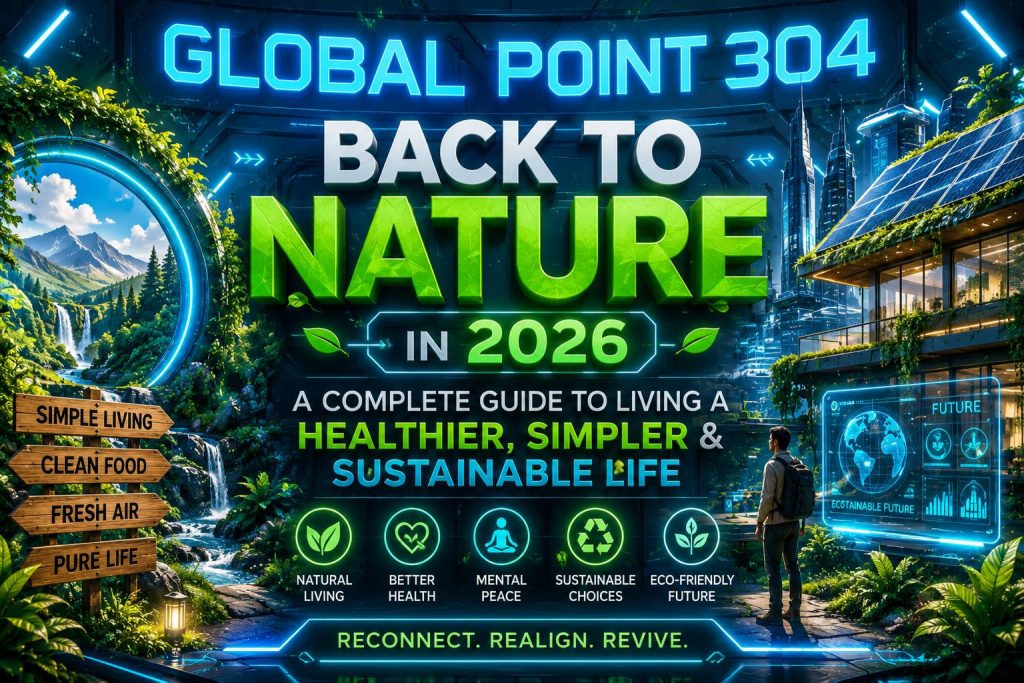
Life in 2026 moves fast. Notifications never stop, cities keep expanding, and screens fill almost every free minute of the day. It’s no surprise that more people than ever are searching for a way to slow down — and the most searched, most shared solution on Google, social media, and even AI search tools right now is simple: Back to Nature.
This isn’t a trend that will fade by next season. It’s a full lifestyle shift — a return to fresh air, real food, natural movement, and quiet moments away from screens. Whether you live in a busy city like Lahore or Karachi, or a quieter town like Fort Abbas, the idea behind Back to Nature living is the same everywhere: reconnect with the natural world to heal your body, calm your mind, and protect the planet for the next generation.
In this complete guide, we’ll walk through exactly what going Back to Nature means in 2026, the science behind why it works, and simple, practical steps you can start today — no matter your budget, city, or daily routine.
What Does “Back to Nature” Really Mean in 2026?
Going Back to Nature doesn’t mean abandoning modern life, quitting your job, or moving to a forest. In 2026, this movement is about making small, consistent choices that bring you closer to natural rhythms — natural food, natural light, natural movement, and natural quiet.
At its core, this philosophy rests on four pillars:
- Simplicity — reducing clutter, waste, and unnecessary consumption
- Sustainability — living in a way that protects, rather than drains, the environment
- Presence — spending real, undistracted time outdoors
- Balance — using technology as a tool, not letting it run your life
People searching for this lifestyle today aren’t looking for extreme minimalism. They want realistic, doable habits — the kind that fit into a normal week with work, family, and responsibilities. That’s exactly what this guide delivers.
The Science-Backed Benefits of Going Back to Nature
The push toward this way of living isn’t just emotional — it’s backed by strong research. Harvard Health has reported that spending just 20 to 30 minutes in an outdoor natural setting can measurably lower stress hormone (cortisol) levels, and the benefits continue to build the longer you stay outside (source: Harvard Health).
Harvard T.H. Chan School of Public Health has also found that at least 120 minutes a week in nature is linked to better overall health, lower rates of heart disease, obesity, diabetes, and reduced mental distress in adults (source: Golden Gate National Parks Conservancy). This is one of the biggest reasons the Back to Nature approach is gaining momentum worldwide — the health payoff is measurable, not just a feeling.
Researchers at Harvard have further explained that time in natural environments is linked to lower cortisol levels and reduced activity in brain regions tied to negative, repetitive thinking — meaning this kind of routine can genuinely support mental health, not just physical health (source: Harvard Medicine Magazine).
Here’s a quick summary of what science says about a consistent Back to Nature routine:
- Lower stress hormone (cortisol) levels within 20–30 minutes outdoors
- Reduced blood pressure and slower resting heart rate
- Better sleep quality and more stable mood
- Sharper focus, memory, and creativity
- Lower long-term risk of heart disease, obesity, and chronic illness
These findings connect directly to what we’ve already covered on Global Point 304 — if you want to strengthen your body from the inside as part of this journey, read our detailed guide on the best foods for immunity, which pairs perfectly with a natural, outdoor lifestyle.
Back to Nature at Home: Simple Daily Habits
You don’t need a big garden or a mountain view to start living this way. Most of the change begins with small, repeatable habits inside your own home. Here are the easiest ways to bring a Back to Nature mindset into your daily routine:
- Open your curtains first thing in the morning. Natural sunlight resets your body clock and supports better sleep at night — a core principle of this approach.
- Add real plants to your rooms. Indoor greenery improves air quality and brings a small piece of nature into spaces where you spend most of your day.
- Switch off overhead lights during the day. Rely on natural daylight whenever possible instead of artificial lighting.
- Use natural materials at home. Wood, cotton, clay, and other natural materials instead of heavy plastic support both your health and the planet.
- Start a small herb pot. Even a windowsill with mint, basil, or coriander connects you to the habit of growing your own food.
None of these steps require money you don’t have. That’s the whole point of the modern Back to Nature movement — it’s built for real, busy lives, not just people with large farms or countryside homes.
Back to Nature in Diet: Eating Naturally and Sustainably
Food is one of the fastest ways to bring your life closer to nature. Processed, packaged meals are convenient, but a natural diet built around whole, fresh ingredients supports better long-term health and fits perfectly into a sustainable lifestyle.
Simple dietary habits to start with as part of this routine:
- Choose seasonal, local fruits and vegetables instead of imported, heavily packaged produce
- Cook at home more often using fresh ingredients instead of processed food
- Reduce sugar and artificial additives where possible
- Drink more water instead of sugary or artificially flavored drinks
- Buy from local farmers’ markets when available — it supports both your health and your local economy
A natural diet also strengthens your immune system, which becomes even more important as the seasons change. If you want a deeper, practical breakdown of immunity-boosting foods, we’ve already covered this in detail in our guide on the best foods for immunity — a great companion read alongside this Back to Nature guide.
Back to Nature Fitness: Outdoor Exercise and Movement
Gyms are useful, but outdoor movement is one of the most powerful parts of any plan built around this philosophy. Researchers studying what’s known as “green exercise” — physical activity performed in natural surroundings — have found added mental health benefits compared to the same activity done indoors (source: Harvard Health).
Easy ways to build outdoor movement into your week:
- Walk or jog in a nearby park instead of only using a treadmill
- Try cycling instead of short car or rickshaw trips
- Do a weekend hike or nature trail if one is available near you
- Practice stretching, yoga, or breathing exercises outdoors in the morning
- Play outdoor sports with friends or family instead of screen-based entertainment
Even 20–30 minutes of outdoor movement a few times a week can noticeably improve your energy, mood, and sleep — one of the simplest and most effective Back to Nature habits anyone can start today.
Back to Nature Mindfulness: Nature Therapy and Mental Health
Mental health struggles have grown sharply in the smartphone era, and one of the most talked-about solutions in 2026 is nature therapy — a direct extension of this idea. A systematic review of forest therapy research found consistent physical and psychological benefits linked to spending time in natural, green environments (source: Environmental Health and Preventive Medicine journal).
Simple mindfulness practices to try:
- Sit quietly outdoors for 10 minutes without your phone — just notice sounds, air, and light
- Practice “forest bathing” — slow, mindful walking through green spaces, focusing on your senses
- Journal outdoors instead of indoors when possible
- Breathe deeply in fresh air for a few minutes each morning before checking your phone
These small rituals are at the heart of the Back to Nature movement — proof that healing doesn’t always require expensive therapy or apps, just consistent, intentional time outdoors.
Sustainable Living: Reducing Your Environmental Footprint
A true Back to Nature lifestyle isn’t only about your personal health — it’s also about protecting the environment you’re trying to reconnect with. The good news is that sustainable living doesn’t require a complete life overhaul. Small, consistent changes add up quickly.
According to the U.S. Environmental Protection Agency, transportation accounts for nearly 28% of total greenhouse gas emissions, making it one of the biggest areas where individual choices matter (source: EPA data via The Roundup). Switching to walking, cycling, or public transport whenever possible is one of the most effective habits for the planet.
Practical sustainability habits to start this month:
- Switch to LED bulbs and unplug devices when not in use
- Reduce single-use plastic — carry a reusable bottle and shopping bag
- Start a small compost bin for kitchen scraps if you have outdoor space
- Choose energy-efficient appliances when replacing old ones
- Air-dry clothes instead of relying only on dryers
- Buy fewer, better-quality items instead of frequent fast-fashion purchases
Home appliances make up roughly 11% of household energy use, so upgrading a few key items over time can meaningfully lower both your bills and your environmental footprint (source: EPA guidelines via Parker & Sons) — another practical way sustainability and this movement work together.
Back to Nature for Families and Children
Children today grow up surrounded by screens more than any generation before them. Introducing this kind of routine early helps kids build healthier habits, stronger attention spans, and a genuine love for the outdoors.
- Plan weekend outdoor family time — parks, gardens, or nature trails
- Let kids help grow a small plant or vegetable at home
- Set daily screen-time limits paired with outdoor play time
- Take family walks after dinner instead of watching TV every night
- Teach children basic recycling and composting habits early
A childhood shaped by this philosophy doesn’t just build good memories — it builds lifelong habits that support both physical and mental health.
Back to Nature in Pakistan: Local Opportunities
Pakistan offers incredible, often underused opportunities for this kind of lifestyle — from the northern valleys of Hunza and Swat to city parks in Lahore, Islamabad, and Karachi, and quieter rural areas like Fort Abbas. You don’t need to travel far to start:
- Visit local parks or green spaces on weekends instead of malls
- Support local farmers and seasonal produce markets
- Explore nearby rural or agricultural areas for short nature trips
- Reduce reliance on plastic in daily shopping, common in local bazaars
- Take advantage of Pakistan’s strong sunlight for natural energy and vitamin D, rather than staying indoors
At Global Point 304, we’ve consistently focused on practical, Pakistan-relevant health and lifestyle content — from immunity-boosting foods to smart, sustainable living tips — because a Back to Nature lifestyle should be realistic for readers here, not just inspired by content made for other countries.
Digital Detox: Balancing Technology and Nature
You don’t need to throw away your phone to live this way — but you do need boundaries. A digital detox doesn’t mean rejecting technology completely; it means using it intentionally instead of letting it control your day.
- Set specific “no-phone” hours, especially early morning and before bed
- Leave your phone indoors during outdoor walks or family time
- Use one outdoor activity a day as a screen-free reset
- Turn off non-essential notifications to reduce constant distraction
This balance — using technology as a tool while still prioritizing real, offline time — is one of the defining ideas of the 2026 Back to Nature movement.
Common Mistakes When Trying to Go Back to Nature
- Trying to change everything at once — leads to burnout and quitting early
- Thinking it requires expensive gear or travel — most habits are free or low-cost
- Ignoring small daily habits in favor of occasional big outdoor trips
- Not involving family — this lifestyle is easier and more enjoyable as a shared habit
A Simple 30-Day Back to Nature Challenge
- Week 1: Add 15–20 minutes of daily outdoor time
- Week 2: Replace two processed meals a week with fresh, home-cooked meals
- Week 3: Reduce single-use plastic and start one small sustainability habit
- Week 4: Add a weekly screen-free outdoor activity for the whole family
Frequently Asked Questions
What does “Back to Nature” mean?
It means adopting simple, natural habits — fresh food, outdoor time, sustainable choices, and less screen dependence — to live a healthier and more balanced life.
Is this lifestyle expensive?
No. Most of these habits, like walking outdoors, cooking fresh meals, or reducing plastic use, cost little to nothing.
How long does it take to see benefits from a Back to Nature routine?
Research shows stress-related benefits can appear after just 20–30 minutes outdoors, with long-term health benefits building over weeks and months of consistency.
Conclusion: Your Back to Nature Journey Starts Today
Going Back to Nature in 2026 isn’t about perfection — it’s about direction. Every small choice, from a morning walk to a home-cooked meal to an hour without your phone, moves you closer to a healthier, calmer, more sustainable life. Start with one habit from this guide today, and let this journey build naturally from there.
For more practical health and wellness guidance, don’t forget to check our related post on best foods for immunity right here on Global Point 304.