Complete History & Industry Analysis
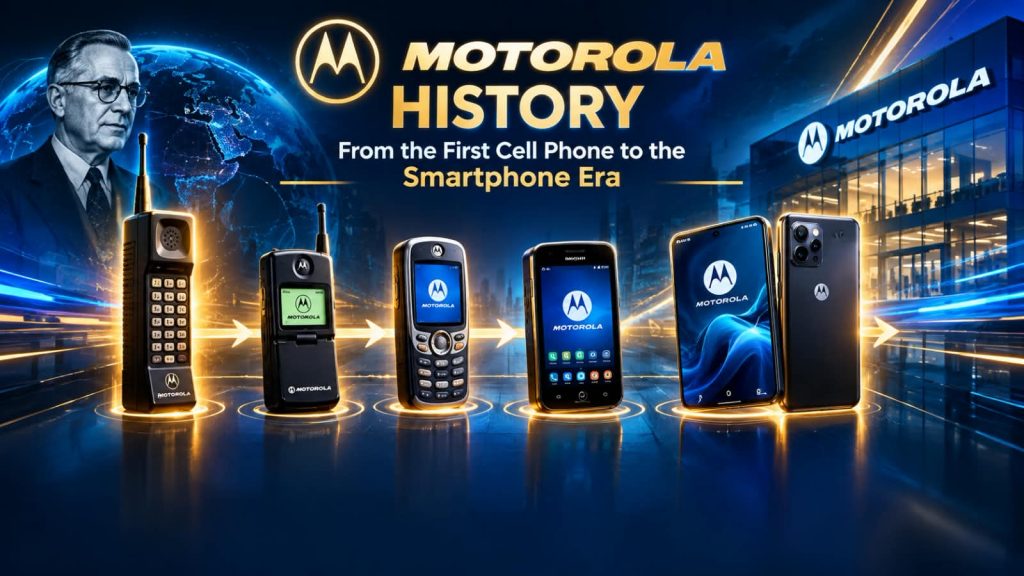
Motorola History is the story of a company that helped transform the way people communicate. From its early days manufacturing car radios to introducing the world’s first handheld mobile phone, Motorola has played an important role in the development of modern communication technology
For decades, Motorola has been associated with innovation, engineering, and iconic mobile phone designs. Its journey includes the famous DynaTAC, the stylish StarTAC, the legendary RAZR V3, the Android-powered Moto series, and today’s foldable Razr smartphones
However, the company’s journey has not always been easy. Motorola experienced periods of extraordinary success, intense competition, financial challenges, and major ownership changes. Its history also demonstrates how quickly the technology industry can change
In this detailed article, Global Point 304 explores Motorola History, from the company’s foundation in 1928 to its role in the modern smartphone industry. We will examine its most important inventions, famous mobile phones, business transformations, and contribution to the global telecommunications industry
Whether you are a technology enthusiast, a student, a smartphone buyer, or simply curious about the history of mobile phones, this comprehensive guide will help you understand how Motorola became one of the most recognizable names in telecommunications
1. The Beginning of Motorola: How It All Started

To understand Motorola History, we need to travel back to 1928, when two brothers established a small electronics company in Chicago, Illinois, in the United States
Paul V. Galvin and his brother Joseph E. Galvin founded the Galvin Manufacturing Corporation. Their initial business focused on producing battery eliminators, devices that allowed battery-powered radios to operate using household electricity
At that time, radios were becoming increasingly popular, but powering them could be inconvenient and expensive. The brothers recognized an opportunity to develop practical products that would make radio technology more accessible
Their small company faced financial and commercial challenges during its early years However, the founders continued looking for new opportunities in the growing electronics industry
One of their most important decisions was to enter the automotive radio market
The Birth of the Motorola Brand
In 1930, the company introduced a car radio that helped establish its reputation in the consumer electronics industry
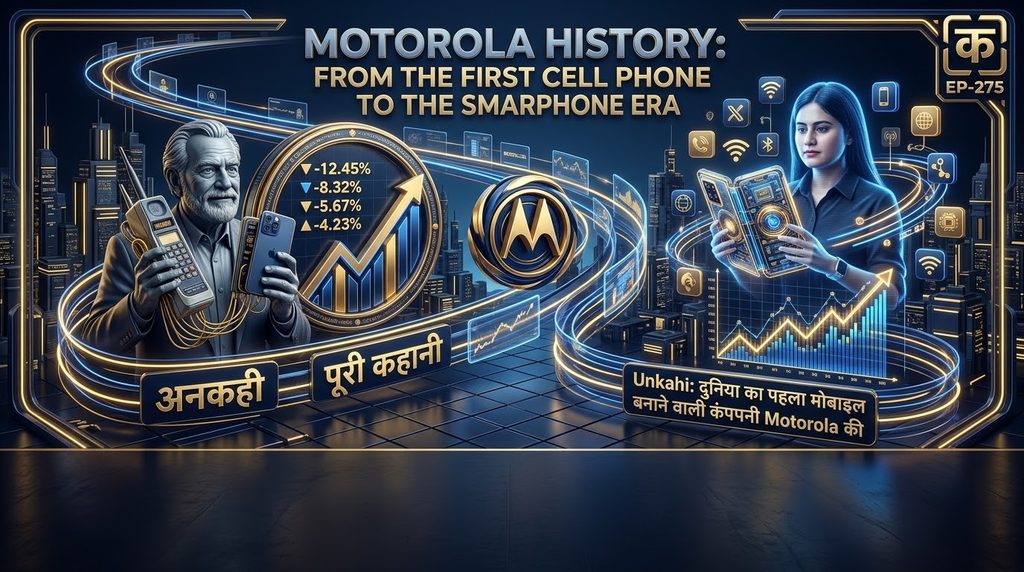
Paul Galvin created the name Motorola by combining the word “motor,” representing automobiles, with the popular “ola” suffix associated with sound and entertainment products
The name became closely associated with car radios and eventually became the company’s official corporate identity
The success of its automotive radios helped Motorola expand its operations and invest in new communication technologies
This early period established the foundation for what would become a remarkable story of engineering and innovation
Motorola’s Expansion into Two-Way Radios
During the 1930s, Motorola expanded beyond car radios and began developing two-way radio communication equipment
These products were particularly useful for police departments, emergency services, and other organizations that required reliable communication over distances
Two-way radios allowed people to communicate without relying on traditional telephone lines
This technology became an important part of Motorola’s business and helped establish its reputation for dependable communication equipment
The company’s early experience with radio technology would later prove essential to its development of cellular phones
2. Motorola During World War II: The Walkie-Talkie Revolution

World War II was a significant period in Motorola History. The demand for portable communication equipment increased as military forces needed reliable ways to coordinate operations
Motorola responded by developing radio equipment designed for military use
One of its most famous products was the SCR-536, commonly known as the Handie-Talkie
Introduced in 1941, this handheld radio allowed soldiers to communicate while moving around the battlefield. Its compact design was an important development in portable communication
Motorola also contributed to the development of the SCR-300 backpack radio, commonly known as the Walkie-Talkie
Unlike the smaller Handie-Talkie, the SCR-300 was carried on a soldier’s back and provided two-way radio communication over greater distances
These devices helped demonstrate the practical value of portable wireless communication
How Military Technology Influenced Motorola
The development of military radios helped Motorola gain valuable experience in several areas
- Portable electronic equipment
- Radio signal transmission
- Antenna design
- Battery-powered communication
- Manufacturing reliable electronic devices
These capabilities later became useful in the development of commercial communication systems
After the war, Motorola continued expanding into consumer electronics, television manufacturing, and semiconductor technology
In 1947, the company officially changed its name to Motorola, Inc
This marked another important milestone in Motorola History, as the name that had originally represented its radio products became the identity of the company itself
3. Motorola’s Role in Television and Semiconductor Technology
Although Motorola is widely recognized today for its mobile phones, its early business was much broader
During the postwar years, the company developed television sets and invested in electronic components
Television became an increasingly important consumer product during the 1950s. Motorola entered this expanding market with television receivers and continued improving its manufacturing capabilities
The company also invested in semiconductor research
Semiconductors are essential components in electronic devices. They help control electrical signals and form the foundation of modern processors, memory chips, and communication systems
Motorola’s semiconductor operations became particularly important during the development of transistors and integrated circuits
The company later introduced products such as the Motorola 68000 processor family, which became influential in computers and other electronic equipment
This broader technological experience helped Motorola establish itself as more than a mobile phone manufacturer
It was becoming a major electronics company with expertise in communication systems, computing, and consumer devices
4. Motorola and the Historic Apollo 11 Moon Landing

One of the most remarkable chapters in Motorola History is connected to the Apollo space program
During the 1960s, NASA worked to develop the technology required to send astronauts to the Moon and communicate with them from Earth
Reliable communication was essential because astronauts needed to exchange information with mission control over enormous distances
Motorola supplied important communications equipment for the Apollo program, including radio and transponder technology
On July 20, 1969, Apollo 11 successfully landed on the Moon
Neil Armstrong and Buzz Aldrin became the first two humans to walk on the lunar surface
Their voices were transmitted back to Earth through the Apollo communications system, which included Motorola equipment
Millions of people around the world watched the historic event on television
Motorola’s contribution to the Apollo program demonstrated how its radio engineering expertise could support some of the most ambitious technological projects of the twentieth century
The Moon landing also helped strengthen the company’s reputation as a major communications technology innovator
5. 1973: Motorola Makes the First Public Handheld Mobile Phone Call

The year 1973 is one of the most important dates in Motorola History
On April 3, 1973, Motorola engineer Martin Cooper made the first public handheld mobile telephone call using a prototype cellular phone
The call took place on a New York City street
Cooper called Joel Engel, a researcher at Bell Labs, who was working on competing mobile communication technology
This historic call demonstrated that a telephone could be carried by an individual rather than being permanently connected to a vehicle or building
The prototype was part of Motorola’s DynaTAC development program
The Original Motorola DynaTAC Prototype
The early DynaTAC prototype was very different from today’s smartphones
It weighed approximately 2.5 pounds and measured nearly 10 inches in length
Its battery required around 10 hours to charge and provided approximately 30 minutes of talk time
The device was expensive to develop and was not immediately available to ordinary consumers
However, the successful demonstration proved that handheld cellular communication was technically possible
It also helped accelerate the development of commercial cellular networks
Why the First Mobile Phone Call Was Important
Before handheld cellular phones became available, mobile communication was generally limited to vehicle-based systems or specialized radio equipment
Motorola’s demonstration introduced a new concept: a personal telephone that could travel with its owner
This innovation eventually changed business communication, personal relationships, travel, and everyday life
The first public call remains one of the defining milestones in Motorola History and the broader history of telecommunications
6. Motorola DynaTAC 8000X: The First Commercial Handheld Cell Phone

After the historic demonstration in 1973, Motorola continued developing its handheld cellular technology
It took approximately ten years of engineering, testing, and regulatory work before the company introduced its first commercial handheld cellular phone
In 1983, Motorola launched the DynaTAC 8000X
The device became one of the most recognizable products in early mobile phone history
It featured a large body, an external antenna, a physical keypad, and a small display
Its price was approximately $3,995 at launch, making it far too expensive for most consumers
Despite its high price, the DynaTAC attracted business professionals and wealthy customers who wanted the convenience of mobile communication
Important Features of the DynaTAC 8000X
- Large handheld design
- Physical numeric keypad
- External antenna
- Approximately 30 minutes of talk time
- Several hours of charging time
- Limited memory for stored numbers
Compared with today’s smartphones, the DynaTAC offered very few features
It could not browse the internet, take photographs, or run applications
Its main purpose was making telephone calls
However, its importance was not determined by the number of features it offered. It was the beginning of a new era in personal communication
The DynaTAC helped establish Motorola as a major player in the emerging cellular phone market
7. Motorola MicroTAC: Making Mobile Phones Smaller

During the 1980s, mobile phone manufacturers faced an important challenge: reducing the size and weight of their devices
The original DynaTAC was revolutionary, but carrying such a large phone was inconvenient
Motorola addressed this challenge with the MicroTAC, introduced in 1989
The MicroTAC was significantly smaller than earlier DynaTAC models
It featured a distinctive folding mouthpiece that covered part of the keypad when the phone was not in use
This design made the phone more convenient to carry and helped establish the popularity of compact mobile phones
The MicroTAC represented an important step toward the smaller and more stylish handsets that would become popular during the 1990s
It also demonstrated Motorola’s growing interest in combining engineering improvements with distinctive product design
8. Motorola StarTAC: The Flip Phone That Changed Mobile Design

In 1996, Motorola introduced the StarTAC, one of the most influential mobile phones of its generation
The StarTAC became famous for its compact clamshell design
Unlike traditional brick phones, it folded in half, making it easier to carry in a pocket or attach to a belt
It was also among the first mobile phones to popularize vibration alerts, allowing users to receive notifications without an audible ringtone
Its lightweight design and distinctive appearance made it especially attractive to business professionals and consumers who wanted a compact mobile phone
Why the StarTAC Became So Popular
The StarTAC offered several advantages over earlier mobile phones
Its folding design reduced its size when not in use. Its lightweight construction improved portability, while its distinctive appearance helped it stand out in a rapidly growing market
The StarTAC also helped establish the flip phone as a recognizable product category
Its success demonstrated that consumers cared about more than just making calls. They also wanted phones that were comfortable to carry and attractive to use
The StarTAC became one of Motorola’s most memorable products and an important part of Motorola History
Its influence can still be seen in modern foldable Razr smartphones
9. Motorola RAZR V3: The Phone That Became a Global Fashion Icon

The early 2000s brought a new era of mobile phone design
Consumers increasingly wanted devices that were stylish, compact, and easy to use
Motorola responded with the RAZR V3, introduced in 2004
The RAZR V3 became one of the most successful mobile phones in the company’s history
Its exceptionally thin body, metallic finish, and distinctive keypad made it instantly recognizable
At just 13.9 millimeters thick, the original RAZR V3 offered a remarkably slim design for its time
Its external display allowed users to check basic information without opening the phone
The internal display, physical keypad, and folding construction created a distinctive combination of practicality and style
The RAZR V3 and Popular Culture
The RAZR V3 became much more than a communication device
It appeared in movies, television programs, celebrity photographs, and advertisements
Its premium appearance helped make it a popular fashion accessory
Motorola sold more than 130 million RAZR V3 units, making it one of the best-selling mobile phone models ever
The phone’s success demonstrated the importance of product design in the mobile industry
It also helped Motorola compete in a market where consumers increasingly considered appearance an important part of their purchasing decisions
The Challenges After the RAZR’s Success
Despite the RAZR’s extraordinary popularity, Motorola faced growing competition
Manufacturers were introducing phones with improved cameras, better software, larger displays, and more advanced internet features
Motorola’s strong position in stylish feature phones did not automatically translate into success in the emerging smartphone market
The company needed to respond to a major change in consumer expectations
This transition became one of the most important turning points in Motorola History
10. The Smartphone Revolution: Motorola Faces a New Challenge

The introduction of the Apple iPhone in 2007 changed the mobile phone industry. Consumers began expecting large touchscreens, internet access, downloadable applications, and user-friendly software
This shift created new challenges for traditional mobile phone manufacturers, including Motorola
The company’s earlier success had been built around hardware design, reliable calling features, and popular feature phones. However, smartphones required a different combination of hardware, software, and application development
Motorola needed a new strategy to remain competitive
Motorola Chooses Android
Google introduced Android as a mobile operating system in 2007. Its open-source approach provided manufacturers with an alternative to developing a completely independent smartphone platform
Motorola recognized the potential of Android and began developing smartphones based on the operating system
This decision became an important turning point in Motorola History
Rather than relying entirely on traditional mobile phones, the company began investing in touchscreen devices and software-based features
Its next major smartphone launch would help bring the brand back into the spotlight
11. Motorola DROID: A Major Android Milestone
In 2009, Motorola introduced the Motorola DROID in partnership with Verizon Wireless
The device featured a touchscreen, a slide-out physical QWERTY keyboard, and Google’s Android operating system
At a time when smartphones were becoming increasingly important, the DROID offered consumers an alternative to the iPhone and other touchscreen devices
Its advertising campaign attracted considerable attention in the United States
The phone appealed particularly to users who preferred physical keyboards but also wanted access to modern smartphone features
What Made the Motorola DROID Special?
The original DROID included several important features
- Android operating system
- Large touchscreen for its time
- Slide-out physical keyboard
- GPS navigation
- Mobile internet access
- Access to Android applications
The DROID helped increase Motorola’s visibility in the Android smartphone market
It also demonstrated that the company could adapt its engineering expertise to a new generation of mobile devices
The DROID’s success was an important part of the company’s smartphone transition
12. Google’s Acquisition of Motorola Mobility

Another major event in Motorola History occurred in 2011, when Google announced its intention to acquire Motorola Mobility
The transaction was completed in 2012 for approximately $12.5 billion
Motorola Mobility was responsible for the company’s mobile phone business, while Motorola Solutions continued operating separately
Google’s acquisition was closely connected to Motorola’s extensive patent portfolio
The patents covered important areas of mobile technology and helped Google strengthen its position in the smartphone industry
The acquisition also gave Google direct experience in manufacturing smartphones
Motorola Under Google
During Google’s ownership, Motorola introduced several notable smartphones
One of the most important was the original Moto X, launched in 2013
The Moto X focused on a clean Android experience, useful software features, and customization options
Customers in supported markets could use Moto Maker to customize aspects of their phones, including colors and finishes
Motorola also introduced the Moto G in 2013
The original Moto G offered a relatively affordable smartphone experience, making it attractive to customers who wanted useful features without paying flagship prices
The Moto G became an important product family and helped establish Motorola’s reputation in the affordable smartphone market
Google’s ownership was relatively short, but it played a significant role in shaping Motorola’s modern product strategy
13. Lenovo Acquires Motorola: A New Chapter Begins

In 2014, Lenovo announced that it would acquire Motorola Mobility from Google
The transaction was completed in October 2014 for approximately $2.91 billion, subject to the deal’s structure and adjustments
This acquisition marked another major change in Motorola History
Lenovo was already an established global computer manufacturer. Acquiring Motorola gave it a recognizable smartphone brand, an established mobile business, and access to important markets
For Motorola, the acquisition provided access to Lenovo’s international manufacturing capabilities and business resources
Motorola Under Lenovo
Under Lenovo, Motorola continued developing smartphones across different price categories
The company maintained the Moto G and Moto E families while expanding its premium Edge and foldable Razr ranges
Motorola also continued focusing on relatively clean Android software, recognizable designs, and a wide range of devices
Lenovo’s ownership did not erase Motorola’s identity. Instead, the Motorola brand continued to be used for smartphones, while Lenovo integrated the business into its wider global operations
This period illustrates how Motorola History has been shaped not only by inventions but also by changing business strategies and ownership
14. Motorola Moto G: Making Smartphones More Accessible

The Moto G deserves special attention in Motorola History because it helped establish a long-lasting smartphone product family
When Motorola introduced the first Moto G in 2013, many consumers wanted smartphones but could not afford expensive flagship devices
The Moto G offered a practical alternative
It combined a relatively affordable price with a useful display, Android software, and sufficient performance for everyday tasks
Over time, the Moto G family expanded into many different models
Some focused on battery life, others on display quality, camera features, or overall performance
Why the Moto G Series Remains Important
The Moto G series helped Motorola maintain a presence in the competitive mid-range smartphone market
It also gave the company an opportunity to reach consumers in developing markets where affordability is an important purchasing consideration
Modern Moto G devices offer features such as
- Large displays
- Multiple camera systems
- Fast charging on selected models
- High-refresh-rate screens on selected models
- 5G connectivity on supported versions
- Android software and Motorola’s additional features
The exact specifications vary by model and market
For readers interested in contemporary Motorola devices, Global Point 304 has also published a detailed comparison of the Motorola Moto G77 vs Infinix Note Edge 5G
You can also explore our Motorola Edge 70 Fusion vs Moto G77 comparison for a closer look at the differences between Motorola’s smartphone categories
15. Motorola Edge Series: Entering the Premium Smartphone Market

As the smartphone market matured, Motorola expanded its ambitions beyond affordable devices
The Motorola Edge series was introduced in 2020, providing a range of premium and upper-mid-range smartphones
These phones emphasized modern display technology, camera capabilities, fast performance, and distinctive designs
Some Edge models featured curved displays, while others adopted flatter screens and different design approaches
The series gave Motorola another way to compete with premium smartphones from Samsung, Apple, Xiaomi, Vivo, and Oppo
The Importance of the Edge Series
The Edge family demonstrates how Motorola has adapted its product strategy to changing consumer expectations
Modern smartphone buyers often consider several factors before purchasing a device
These include display quality, battery life, camera performance, processor speed, software support, and price
Motorola’s Edge lineup has attempted to address these requirements through different models and configurations
However, features and availability vary significantly between countries
For Pakistani buyers, comparing the specifications, local prices, warranty arrangements, and software update policies of individual models is particularly important
Global Point 304 also covers competing smartphones, including the Oppo Find X9 Ultra price in Pakistan and our Vivo X300 FE vs Xiaomi 17 comparison
16. Motorola Razr Returns: From Classic Flip Phones to Foldable Smartphones

One of the most interesting developments in modern Motorola History is the return of the Razr
The original RAZR V3 became famous because of its thin body and folding design
However, the rise of touchscreen smartphones eventually made traditional keypad phones less attractive to many consumers
Motorola later revived the Razr name in the era of foldable displays
In 2019, the company introduced a modern foldable Razr smartphone
Unlike the original RAZR V3, the new device used a flexible display that could fold vertically
When opened, it offered a smartphone-sized screen. When closed, it became much more compact
How Modern Razr Phones Differ from the Original
The original RAZR V3 was primarily a feature phone designed for calls, text messages, and basic multimedia
Modern Razr smartphones are full-fledged smartphones
They offer features such as
- Flexible OLED displays
- Android operating systems
- Touchscreen controls
- Smartphone cameras
- Application support
- External displays on selected models
- Modern wireless connectivity
The new Razr range combines the visual identity of Motorola’s historic flip phones with the capabilities of contemporary smartphones
It also reflects a wider industry trend toward foldable devices
Although foldable phones introduce engineering challenges involving screen durability, hinges, and repair costs, they provide consumers with a different form factor from conventional smartphones
Motorola’s return to the Razr category is a particularly interesting example of how a company can reuse its historical brand identity for a new generation of technology
17. Motorola in the 5G Era

The introduction of 5G networks has created another important chapter in Motorola History
5G is the fifth generation of mobile network technology. It is designed to support higher data rates, lower latency in suitable conditions, and greater network capacity
Motorola has introduced several 5G-compatible smartphones across its product families
These include selected Moto G, Edge, and Razr models
However, 5G availability depends on the particular phone, the supported network bands, the mobile operator, and local network coverage
What 5G Means for Motorola Users
For smartphone users, 5G can provide faster downloads and smoother access to supported online services
It can also improve connectivity in areas where compatible networks have sufficient capacity
However, a 5G label does not automatically guarantee faster internet everywhere
Actual performance depends on network infrastructure, signal strength, congestion, and the phone’s hardware
Motorola’s 5G devices demonstrate how the company continues to develop products for changing mobile network standards
The transition from early cellular networks to 5G is one of the most significant technological developments covered by Motorola History
18. Motorola’s Contribution to Modern Smartphone Technology
Motorola’s influence extends beyond the individual phones it has introduced. Its engineering work has contributed to the wider development of mobile communication
The company has participated in several important areas of technology, including radio communication, cellular networks, semiconductor development, and mobile device design
Its early experience with two-way radios helped establish expertise in wireless communication
Its DynaTAC project demonstrated the potential of handheld cellular phones
Its StarTAC and RAZR products showed how mobile phone design could become more compact and fashionable
Its Android smartphones demonstrated the importance of combining hardware with modern mobile software
These developments illustrate why Motorola History remains relevant to anyone interested in the evolution of the smartphone industry
From Simple Calls to Connected Devices
Early Motorola phones were primarily designed for voice communication
Modern smartphones, however, are used for photography, navigation, education, entertainment, online banking, video calls, and countless other activities
This transformation has required major improvements in processors, displays, batteries, cameras, and wireless connectivity
Motorola has adapted its products to support many of these changes
The company continues to compete in a market where manufacturers must balance innovation, affordability, design, and software support
19. Motorola vs Other Smartphone Brands

Motorola is now part of a highly competitive global smartphone industry
Its competitors include Apple, Samsung, Xiaomi, Oppo, Vivo, and other manufacturers
Each brand has its own product strategy, software experience, and target customers
Motorola’s historical strength has been its experience in communication technology and distinctive mobile phone designs
Its current product portfolio includes affordable smartphones, mid-range devices, premium models, and foldable phones
Other manufacturers have also introduced innovations in smartphone photography, display technology, artificial intelligence, and charging systems
For example, readers interested in the evolution of smartphone cameras can explore Global Point 304‘s article on the best camera phones for content creators
Our Huawei Mate XT 2 Triple Foldable article also explores the development of alternative foldable designs
For another look at smartphone innovation, visit our coverage of the Honor Robot Phone 2026
These comparisons help illustrate how the smartphone market has developed since Motorola introduced its first handheld cellular phone.
20. Motorola’s Business Challenges and Lessons from Its History
The story of Motorola is not only about successful products. It also includes difficult business decisions and periods of intense competition
The company’s experience provides several useful lessons about the technology industry
The Risk of Depending on a Successful Product
The RAZR V3 was an extraordinary commercial success
However, the popularity of a particular product cannot guarantee long-term success in a rapidly changing market
As touchscreen smartphones became more popular, consumers began demanding more advanced software and internet capabilities
Motorola had to adapt to a new competitive environment
The Importance of Software
Modern smartphones are not simply electronic devices. Their operating systems, applications, security features, and software updates are equally important
The transition to Android helped Motorola participate in the smartphone market
It also demonstrated how software can influence the success of hardware products
The Importance of Innovation
Motorola’s history shows that innovation must continue even after a company achieves major commercial success
The company has repeatedly introduced new products to respond to changing consumer expectations
Its development of the DynaTAC, StarTAC, RAZR, Moto G, Edge, and modern Razr families illustrates different approaches to product innovation
These examples make Motorola History an interesting case study for students, business researchers, and technology enthusiasts
21. Motorola Today: What Is the Company’s Position?

Motorola Mobility is owned by Lenovo, while Motorola Solutions operates as a separate company focused on communications and related technologies for businesses and public safety organizations
Today, the Motorola smartphone portfolio includes several major product families
| Product family | Main market |
|---|---|
| Moto E | Entry-level smartphones |
| Moto G | Affordable and mid-range smartphones |
| Motorola Edge | Premium and upper-mid-range smartphones |
| Motorola Razr | Foldable smartphones |
The availability of individual models varies by country
Motorola continues to develop devices for consumers with different budgets and requirements
Its product strategy combines its established brand identity with modern smartphone features
The company also benefits from its connection to Lenovo, which has experience in the global computer and electronics markets
However, Motorola continues to face competition from manufacturers with large smartphone portfolios and strong software ecosystems
Its future success will depend on factors such as product innovation, pricing, customer experience, software support, and market demand
22. The Future of Motorola: Artificial Intelligence and Foldable Phones

The future of Motorola History will be shaped by developments in artificial intelligence, mobile connectivity, and flexible display technology
Artificial intelligence is becoming an increasingly important part of modern smartphones
AI-powered features can assist with photography, voice interactions, image editing, translation, and productivity
Motorola has introduced AI-related features in selected devices, although the available capabilities depend on the model and software version
Foldable phones are another important area for the company
The Razr range provides Motorola with an opportunity to build on its historic reputation for flip phone design
Future foldable devices may bring improvements in display durability, hinge construction, battery efficiency, and camera technology
Another important development is the continued expansion of 5G networks
As mobile infrastructure improves, smartphones will have more opportunities to support connected services and advanced applications
Motorola’s experience in communication technology gives it a long history to build upon as these technologies develop
However, future products and features will depend on actual research, development, and market demand rather than historical achievements alone
23. Why Motorola History Still Matters
The importance of Motorola History goes far beyond the company’s own business achievements
Motorola helped establish several important stages in the development of mobile communication
Its early radios demonstrated the value of portable wireless communication
Its DynaTAC prototype helped prove that handheld cellular phones were possible
The commercial DynaTAC made mobile phones available to paying customers
The StarTAC and RAZR V3 helped popularize compact and stylish mobile phone designs
Its Android smartphones demonstrated the company’s ability to adapt to a new generation of mobile technology
Today, its modern Razr devices connect the company’s historic identity with the foldable smartphone market
These developments show how technology companies must constantly respond to new consumer expectations
For readers interested in other important mobile phone brands, Global Point 304 also explores the BlackBerry Success and Failure Story , examining another company’s journey through the changing mobile industry
24. Important Milestones in Motorola History
The following timeline summarizes some of the most important events in the company’s development
| Year | Important event | Historical significance |
|---|---|---|
| 1928 | Galvin Manufacturing Corporation founded | The beginning of the company |
| 1930 | Motorola car radio introduced | Established the Motorola brand |
| 1940 | Military radio development | Expanded portable communication technology |
| 1947 | Company renamed Motorola, Inc. | Established the corporate identity |
| 1969 | Apollo 11 Moon landing | Motorola equipment contributed to space communications |
| 1973 | First public handheld mobile phone call | Martin Cooper demonstrated the DynaTAC prototype |
| 1983 | DynaTAC 8000X launched | First commercial handheld cellular phone |
| 1989 | MicroTAC introduced | Advanced compact mobile phone design |
| 1996 | StarTAC introduced | Popularized the clamshell mobile phone |
| 2004 | RAZR V3 launched | Became a major global design success |
| 2009 | Motorola DROID introduced | Important Android smartphone launch |
| 2011 | Google announced Motorola acquisition | Major ownership transition |
| 2012 | Google completed acquisition | Motorola Mobility became part of Google |
| 2013 | Moto X and Moto G introduced | New Android product strategy |
| 2014 | Lenovo acquired Motorola Mobility | Beginning of the Lenovo ownership era |
| 2019 | Modern foldable Razr introduced | Revived the famous Razr name |
| 2020 onward | Expansion of Edge and Razr families | Continued development of premium and foldable smartphones |
25. Global Point 304: Exploring Motorola’s Legacy and Modern Technology
At Global Point 304, our goal is to make technology easier to understand through informative articles, smartphone comparisons, product reviews, and historical features
Our coverage of Motorola History connects the company’s early inventions with the smartphones that consumers use today
We believe that understanding the development of technology helps readers make more informed decisions when purchasing new devices
Our technology articles cover several areas, including smartphone specifications, camera performance, mobile software, battery life, and emerging innovations
Readers can also explore our articles on Oppo A7 Pro Max , Oppo Reno 16F vs Infinix Note 60 Pro , and Vivo V80 Lite 5G price in Pakistan
For readers interested in smartphone purchasing decisions, our Best Mobile Buying Guide 2026 offers another useful resource
Global Point 304 aims to provide clear, accessible, and informative content for readers who want to understand both the history and the future of mobile technology
Frequently Asked Questions About Motorola History
1. When was Motorola founded?
Motorola began in 1928 as the Galvin Manufacturing Corporation, founded by Paul V. Galvin and Joseph E. Galvin in Chicago, Illinois. The company initially manufactured battery eliminators before expanding into car radios and communication equipment
2. Who invented the first handheld mobile phone?
Motorola engineer Martin Cooper led the development of the first handheld cellular phone prototype. On April 3, 1973, he made the first public handheld mobile phone call in New York City
3. What was the first commercial Motorola mobile phone?
The Motorola DynaTAC 8000X was introduced commercially in 1983. It was one of the first commercially available handheld cellular phones and became an important milestone in mobile communication
4. Why was the Motorola DynaTAC so famous?
The DynaTAC demonstrated that people could carry a cellular telephone rather than depending on a fixed telephone or vehicle-based system. Its large size, high price, and limited battery life reflected the early stage of mobile phone technology
5. What made the Motorola StarTAC special?
The Motorola StarTAC, introduced in 1996, became famous for its compact clamshell design and lightweight construction. It helped popularize the flip phone and made mobile phones easier to carry
6. Why was the Motorola RAZR V3 so popular?
The RAZR V3 became popular because of its exceptionally thin design, metallic finish, distinctive keypad, and fashionable appearance. Introduced in 2004, it eventually sold more than 130 million units
7. Did Google own Motorola?
Yes. Google acquired Motorola Mobility in 2012 for approximately $12.5 billion. Google later sold Motorola Mobility to Lenovo in 2014
8. Who owns Motorola today?
Motorola Mobility is owned by Lenovo, which acquired the business from Google in 2014. Motorola Solutions is a separate publicly traded company that focuses on communication and safety technologies
9. Does Motorola still make smartphones?
Yes. Motorola continues to manufacture smartphones under the Moto E, Moto G, Edge, and Razr product families. Availability and specifications vary by market
10. What is the connection between the original RAZR and modern Razr phones?
Both generations use a folding design. The original RAZR V3 was a traditional feature phone, while modern Razr devices use flexible displays and Android software to provide a complete smartphone experience
11. What is Motorola famous for?
Motorola is particularly famous for its early handheld cellular phones, the DynaTAC, the StarTAC flip phone, the RAZR V3, and its contributions to radio communication and mobile technology
12. What is the importance of Motorola History?
Motorola History documents several major developments in communication technology, including portable radios, handheld cellular phones, popular flip phones, and modern Android and foldable smartphones
External Resources for Further Reading
Readers who want to explore the company’s history and the development of mobile communications can visit these established sources
1.
Information about Motorola’s current smartphones, product families, and technology
2.
Motorola Solutions Official Website
Information about the company’s professional communication and public safety technologies
3.
Historical information about the Apollo missions and space exploration
4.
Federal Communications Commission
Information about telecommunications regulation and wireless communications in the United States
5.
IEEE Official Website
Engineering resources and information about the history of electrical and electronic technologies.
These resources provide additional context for understanding Motorola’s place in the development of communication technology
Final Thoughts: Motorola’s Journey from Radios to Smartphones
Motorola History is a remarkable story of invention, adaptation, and technological change
From its beginnings as a small electronics company in Chicago to its role in the development of handheld cellular phones, Motorola has influenced several generations of communication technology
The DynaTAC introduced a new way to make telephone calls. The StarTAC helped popularize compact flip phones. The RAZR V3 became a global fashion icon, while the DROID and Moto G helped the company establish a place in the Android smartphone market
Today, Motorola continues its journey through modern smartphones, premium Edge devices, and foldable Razr phones
Its history also offers an important lesson: success in technology depends on the ability to adapt. Even a company with a long record of innovation must continue developing products that meet changing customer needs
As artificial intelligence, 5G, and foldable displays continue to evolve, Motorola’s next chapter will add to a history that has already transformed mobile communication
For more smartphone histories, product comparisons, and technology guides, keep visiting Global Point 304, where we explore the innovations shaping the digital world.