
A complete journey through the rise, decline, and transformation of one of the world’s most recognizable technology companies
Introduction: The Smartphone Company That Refused to Disappear
There was a time when owning a BlackBerry smartphone was a symbol of success. Business executives, politicians, journalists, celebrities, and technology enthusiasts all wanted one. Its physical keyboard, secure email, and famous BlackBerry Messenger service made it one of the most recognizable technology brands in the world
Before the iPhone and Android became household names, BlackBerry was already changing how people communicated. It introduced a new way to send and receive emails while traveling, making mobile communication faster and more convenient
However, the technology industry never stands still. When touchscreen smartphones and mobile applications became popular, BlackBerry struggled to keep up. Its market share declined, its smartphone business suffered, and competitors rapidly attracted customers
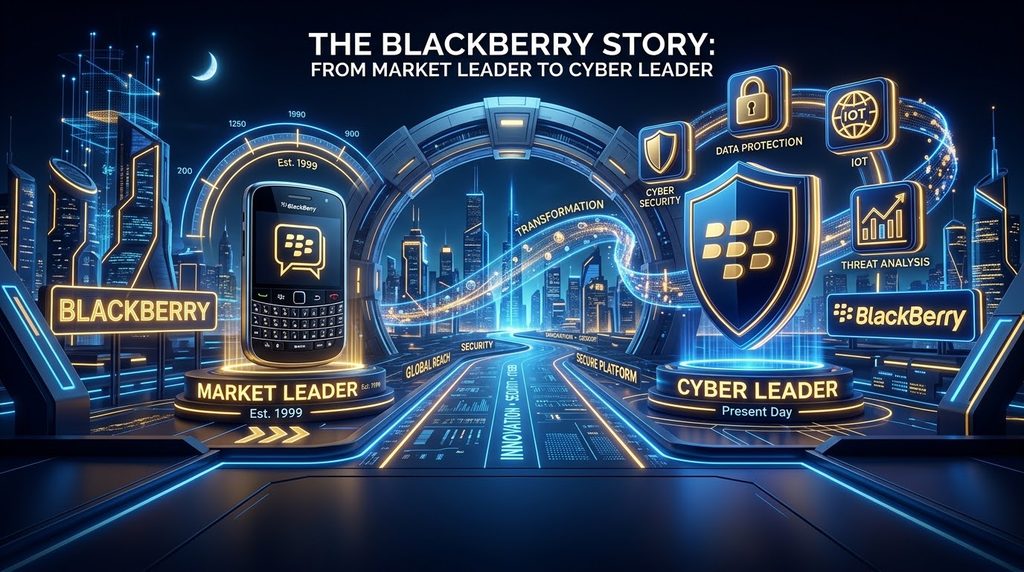
The BlackBerry Success and Failure Story is not simply about a company losing its position in the smartphone market. It is also about how a technology company recognized the value of its existing expertise and gradually moved toward cybersecurity, enterprise software, and automotive technology
Today, BlackBerry is no longer the smartphone manufacturer that millions of people remember. Its software is used in connected vehicles and business security systems, demonstrating that a company’s identity can change dramatically over time
In this detailed guide, Global Point 304 explores the BlackBerry Success and Failure Story, including its early achievements, major business mistakes, competition with Apple and Google, and transformation into a software-focused company
1. The Beginning of BlackBerry: From a Small Canadian Company to a Global Brand

The BlackBerry story began long before smartphones became common. In 1984, Mike Lazaridis and Douglas Fregin founded Research In Motion (RIM) in Waterloo, Ontario, Canada
The company initially focused on wireless technology and electronic communications. Its early work involved developing solutions that allowed information to travel between devices without traditional wired connections
At the time, mobile computing was still in its early stages. Most people relied on desktop computers, landline telephones, and paper-based communication. Portable devices were expensive and had limited capabilities
RIM recognized that wireless communication could become an important part of everyday business
In 1996, the company introduced the Inter@ctive Pager 900, a two-way messaging device. It allowed users to send and receive messages, providing an early example of the mobile communication experience that would later make BlackBerry famous
The company continued improving its products and developing wireless messaging technology
In 1999, RIM introduced the BlackBerry 850, a wireless handheld device with a physical keyboard and email capabilities
This product helped establish the BlackBerry name and introduced many business users to the convenience of mobile email
The BlackBerry Success and Failure Story began with a simple but powerful idea: people should not have to sit in front of a computer to communicate professionally
2. Why BlackBerry Became So Successful

BlackBerry became successful because it solved a real problem for professionals
Before smartphones became widely available, checking business emails while traveling was inconvenient. Employees often needed a laptop, an internet connection, and sufficient time to access their inboxes
BlackBerry simplified this process
Its devices offered mobile email, messaging, telephone calls, and organizational tools in a compact package
Several features helped the company establish its reputation
2.1 Push Email Changed Mobile Communication
One of BlackBerry’s most important innovations was push email
Instead of repeatedly opening an application to check for new messages, users could receive emails automatically on supported devices and networks
This was especially useful for business professionals who needed to respond quickly
Lawyers could communicate with clients while traveling. Executives could receive important business updates outside the office. Journalists could stay connected while covering events
BlackBerry made mobile email feel immediate and practical
This convenience became one of the most important reasons businesses adopted its devices
2.2 The Physical QWERTY Keyboard
Another defining feature was the physical keyboard
BlackBerry smartphones featured compact QWERTY keyboards that allowed users to type messages using physical keys
For people who wrote dozens of emails every day, this design was extremely attractive
The keyboard also helped distinguish BlackBerry from many competing mobile devices
Models such as the BlackBerry Bold, Curve, and Pearl became popular because they combined communication features with recognizable designs
Even after touchscreen smartphones became popular, some users continued to prefer physical keyboards
2.3 BlackBerry Enterprise Server
BlackBerry’s success was not based on hardware alone
Its enterprise software was a major part of its business strategy
BlackBerry Enterprise Server, commonly known as BES, helped companies manage smartphones and protect corporate information
IT administrators could apply security policies, manage devices, and remotely erase business data from lost or stolen phones
For organizations handling confidential information, these capabilities were valuable
BlackBerry developed a reputation for providing secure mobile communication, making its products particularly attractive to corporations and government organizations
2.4 BlackBerry Messenger Became a Cultural Phenomenon

BlackBerry Messenger, commonly known as BBM, was another major reason behind the company’s popularity
BBM allowed BlackBerry users to communicate through unique PINs instead of relying exclusively on phone numbers
It introduced convenient messaging features, including delivery notifications, read receipts, group chats, and status updates
For many users, BBM was more than a messaging application. It became part of their daily social lives
Friends exchanged PINs, shared updates, and stayed connected throughout the day
BBM was particularly popular among young people in several markets, including Pakistan, Indonesia, and parts of the Middle East
However, BBM’s popularity also created a challenge. Its original experience was closely connected to BlackBerry devices, limiting its reach when customers began moving to other smartphone platforms
3. BlackBerry at Its Peak: A Smartphone Market Leader
During the mid-to-late 2000s, BlackBerry was one of the most influential smartphone brands
Its devices were popular among corporate customers, government employees, and everyday consumers
In the United States, BlackBerry became especially prominent in the business smartphone market
The company’s products were associated with productivity, communication, and professional status
Its popularity was also helped by celebrities and political figures who used BlackBerry devices
The BlackBerry Success and Failure Story reached its most successful stage when the company had a strong combination of hardware sales, enterprise services, and a loyal customer base
However, its position in the market also created a serious risk
The company had become accustomed to success with a particular type of smartphone. It was not fully prepared for the speed at which consumer expectations would change
4. The iPhone Arrives: A Turning Point in BlackBerry History

On January 9, 2007, Apple introduced the original iPhone
The device featured a large touchscreen, an internet browser, multimedia capabilities, and a new approach to smartphone interaction
Its design was very different from BlackBerry’s traditional products
Instead of focusing primarily on email and physical typing, Apple emphasized a complete touchscreen experience
At first, BlackBerry’s leadership did not consider the iPhone an immediate threat to its core business
The company believed that its physical keyboard, business features, and established enterprise relationships gave it a competitive advantage
However, consumer expectations were changing
People increasingly wanted smartphones that could do much more than send emails and make telephone calls
They wanted internet browsing, music, video, games, photography, and applications
The iPhone helped accelerate this transformation
BlackBerry continued to have loyal customers, but the smartphone market was moving toward a new model that placed greater emphasis on software and user experience
This was one of the most important turning points in the BlackBerry Success and Failure Story
5. The Rise of Android and the Changing Smartphone Industry

Apple was not the only company changing the smartphone market
Google introduced Android, an operating system that smartphone manufacturers could use to develop a wide variety of devices
Android helped manufacturers offer smartphones at different prices and with different hardware designs
As the platform expanded, more companies entered the smartphone market
Samsung, HTC, Motorola, and other manufacturers developed Android devices for different customer groups
This created intense competition
BlackBerry now faced a market where customers could choose from numerous touchscreen devices, large application libraries, and a wide range of prices
Its traditional strengths were no longer enough to maintain the same level of popularity
The Importance of Mobile Applications
The launch of Apple’s App Store in 2008 changed the smartphone industry
Developers gained a convenient way to distribute applications to iPhone users
Android also developed a large application ecosystem
Customers could install social media applications, mobile games, navigation tools, banking apps, photo editors, and productivity software
BlackBerry had applications of its own, but its developer ecosystem struggled to match the scale and appeal of iOS and Android
As popular services expanded on competing platforms, BlackBerry users increasingly found themselves missing applications they wanted
The BlackBerry Success and Failure Story demonstrates how important software ecosystems can become when a product evolves into a platform
6. The Major Mistakes That Contributed to BlackBerry’s Decline
BlackBerry’s decline did not happen because of a single product or decision
Several business and technology challenges developed over time
6.1 Relying Too Much on the Physical Keyboard
The physical keyboard was one of BlackBerry’s greatest strengths
However, the company initially underestimated how quickly touchscreen smartphones would become popular
Apple showed that many customers were willing to replace physical keys with a large touchscreen
Touchscreens also created more space for browsing, video, games, and applications
BlackBerry continued to develop keyboard-focused devices even as touchscreen designs gained popularity
The company eventually introduced touchscreen models, but its early response did not match the experience offered by its competitors
6.2 A Slow Response to the App Revolution
BlackBerry had developed its reputation around email and secure communication.
However, the smartphone market was becoming an application-driven industry
Customers increasingly expected their phones to provide access to a large selection of third-party apps
Apple and Google attracted developers by offering widely used platforms and distribution systems
BlackBerry faced difficulties modernizing its software and attracting developers at the same pace
The absence of some popular applications made its devices less appealing to consumers
6.3 The BlackBerry Storm

In 2008, BlackBerry introduced the Storm, an important attempt to compete with touchscreen smartphones
The device featured a touchscreen with a clickable surface called SurePress
The idea was to combine the flexibility of a touchscreen with the physical feedback associated with a traditional keyboard
Unfortunately, the Storm experienced software and usability problems
Some users complained about typing difficulties, performance issues, and inconsistent touchscreen behavior
The product received criticism and struggled to establish the same reputation as BlackBerry’s successful keyboard devices
The Storm illustrated the challenges of developing a new product category while trying to catch up with established competitors
6.4 The BlackBerry PlayBook

In 2011, BlackBerry entered the tablet market with the PlayBook
The tablet featured a compact design and a new operating system based on QNX technology
Its hardware and interface attracted attention, but the original product had a major limitation
It lacked a built-in native email application and required users to connect it to a compatible BlackBerry smartphone to access certain communication features
For customers who wanted a complete tablet experience, this was a significant disadvantage
The PlayBook struggled to compete with the iPad and other tablets
It became another example of the difficulties BlackBerry faced when expanding beyond its traditional smartphone business
6.5 Delayed BlackBerry 10
BlackBerry eventually recognized that its existing operating system needed a major overhaul
The company developed BlackBerry 10, a new operating system based on QNX technology
It introduced a gesture-based interface, improved multitasking, and a redesigned user experience
The first BlackBerry 10 smartphones arrived in 2013
Although the operating system offered several interesting features, it entered a market where iOS and Android already had established developer communities and large application libraries
BlackBerry struggled to attract enough customers and developers to reverse its decline
The BlackBerry Success and Failure Story shows how difficult it can be to recover market share after competitors have established strong platforms
7. The Decline of BlackBerry’s Smartphone Business
By the early 2010s, BlackBerry was facing serious financial and competitive challenges
Its smartphone market share had fallen considerably from its earlier position
Customers were increasingly choosing iPhones and Android devices
The company attempted to improve its product range, but sales continued to decline
In 2013, BlackBerry announced significant restructuring measures
The company also changed its corporate name from Research In Motion to BlackBerry Limited, bringing its corporate identity in line with its best-known brand
However, the name change could not solve the underlying business challenges
BlackBerry had to make difficult decisions about its future
Continuing to compete directly in smartphone hardware required significant investment in research, manufacturing, marketing, and distribution
The company needed to determine whether it could realistically regain its former position in the smartphone market
That question eventually led to a major strategic transformation
8. John Chen and the Decision to Change BlackBerry’s Direction

In November 2013, John Chen became BlackBerry’s chief executive officer
Chen had experience leading technology businesses through difficult periods
He joined BlackBerry when the company was facing declining smartphone sales and financial pressure
Rather than continuing to invest heavily in traditional smartphones, Chen focused on the company’s enterprise customers, software, and security expertise
The strategy involved reducing the company’s dependence on hardware and building a more sustainable software business
BlackBerry had several valuable assets that could support this transition
These included its enterprise security technology, software patents, QNX operating system, and established relationships with organizations that needed secure communications
The strategy did not immediately eliminate BlackBerry’s challenges. However, it provided a different direction for the company
The 2016 Hardware Decision
In September 2016, BlackBerry announced that it would stop designing and manufacturing its own smartphones internally
Instead, the company would license its brand and software to external manufacturers
This was a major turning point
BlackBerry-branded phones continued to appear in the market through licensing agreements, but the company shifted its own focus toward software and services
The decision reduced its exposure to the costs and risks associated with manufacturing smartphones
It also allowed BlackBerry to concentrate more resources on enterprise software, cybersecurity, and embedded systems
The BlackBerry Success and Failure Story had entered a new phase
9. BlackBerry’s Smartphone Licensing Strategy

After moving away from internal hardware manufacturing, BlackBerry licensed its brand to third-party companies
TCL Communication became one of the most recognizable partners
It developed and sold BlackBerry-branded Android smartphones, including the KEYone and KEY2
These devices combined Android software with physical keyboards, appealing to customers who still preferred traditional BlackBerry designs
Other companies also received regional licensing rights
The licensing approach allowed BlackBerry to maintain a presence in the smartphone market without directly managing the entire manufacturing process
However, the company no longer controlled the smartphone market in the way it once had
The licensing strategy was part of a broader transition toward software and cybersecurity
BlackBerry-branded phones eventually became less prominent, while the company continued developing its enterprise and embedded software businesses
10. BlackBerry’s Transformation into a Cybersecurity Company

BlackBerry’s transformation was based on an important realization
Although its smartphone business had declined, the company still had experience in secure communication, device management, and software development
These capabilities were relevant to the growing cybersecurity market
Businesses and governments were becoming increasingly dependent on connected devices, cloud services, remote work, and digital communication
As digital infrastructure expanded, so did the need to protect it
BlackBerry began concentrating on software that could help organizations manage devices, detect threats, and protect sensitive information
Its software portfolio included endpoint security, unified endpoint management, crisis communication, and embedded systems
The company also invested in artificial intelligence and machine learning through its acquisition of Cylance
This transformation became a central part of the modern BlackBerry Success and Failure Story
11. Cylance: BlackBerry’s Move into AI-Powered Cybersecurity

One of BlackBerry’s most important software acquisitions was Cylance
In 2019, BlackBerry completed its acquisition of Cylance, an artificial intelligence cybersecurity company, for approximately $1.4 billion
Cylance had developed technology designed to identify malicious software using machine learning
Traditional antivirus systems often rely on known malware signatures
When a new threat appears, security vendors analyze it and distribute updated detection information
Machine learning offers another approach
Instead of relying exclusively on previously identified threats, AI-based security systems can analyze characteristics of files and identify suspicious behavior or patterns
Cylance’s technology became part of BlackBerry’s endpoint security portfolio
How AI Can Help Detect Cyber Threats
Modern organizations face a wide variety of cybersecurity risks
These include ransomware, malicious email attachments, suspicious downloads, and unauthorized software
AI-based security tools can help analyze large amounts of data and identify potential threats
They can also help security teams prioritize suspicious activity
However, artificial intelligence is not a perfect security solution
Models can make mistakes, and attackers constantly change their techniques
Organizations still need security policies, software updates, monitoring, employee training, and incident response plans
BlackBerry’s investment in Cylance reflected the growing importance of automated threat detection in cybersecurity
12. BlackBerry QNX: The Technology Behind Modern Vehicles

One of the most significant parts of BlackBerry’s modern business is QNX
QNX is a real-time operating system used in embedded systems, including automotive technology
BlackBerry acquired QNX Software Systems in 2010 from Harman International
Unlike a traditional smartphone operating system, QNX is designed for specialized devices and systems that need predictable responses
It is used in applications where reliability, stability, and controlled system behavior are important
Modern vehicles contain numerous electronic systems
These include digital instrument clusters, infotainment systems, driver assistance features, and vehicle control technologies
Many of these systems depend on embedded software
QNX provides software components and development tools that automakers can use to build these systems
Why Automakers Use QNX
Automotive software has different requirements from ordinary mobile applications
A music application freezing on a smartphone can be frustrating
A malfunction in a vehicle’s safety-related software can have much more serious consequences
Automotive manufacturers therefore need systems designed to meet strict reliability and safety requirements
QNX uses a microkernel architecture that separates important system functions into isolated processes
This can help limit the impact of certain software failures
It also supports the development of systems that need predictable real-time performance
QNX technology is used across a range of automotive applications, although the exact software and responsibilities differ between vehicles and manufacturers
QNX and the Connected Car Industry
The modern automobile is becoming increasingly software-driven
Electric vehicles, advanced driver assistance systems, digital dashboards, and connected services all depend on software
As vehicles become more connected, manufacturers must consider cybersecurity and software reliability throughout the vehicle’s lifecycle
QNX is part of this growing automotive software ecosystem
BlackBerry has reported that QNX software is deployed in hundreds of millions of vehicles and is used by many major automotive manufacturers
This business gives BlackBerry a role in the automotive industry that is very different from its former position as a smartphone manufacturer
13. BlackBerry QNX vs. Android Automotive OS

BlackBerry QNX and Android Automotive OS are both associated with modern vehicle software, but they serve different purposes
QNX is a real-time operating system used in embedded and safety-related automotive applications
Android Automotive OS is Google’s operating system designed for in-vehicle infotainment experiences
Depending on the vehicle architecture, different operating systems can run separate parts of the vehicle’s software environment
| Feature | BlackBerry QNX | Android Automotive OS |
|---|---|---|
| Main purpose | Embedded and real-time systems | In-vehicle infotainment |
| Typical applications | Digital clusters, embedded controls, and other automotive systems | Navigation, media, and connected applications |
| Architecture | Microkernel-based | Based on the Android platform and Linux kernel |
| Main focus | Reliability, isolation, and predictable performance | Applications and user experience |
| Development ecosystem | Automotive and embedded software developers | Android developers and automotive partners |
| Common uses | Automotive and industrial systems | Vehicle infotainment systems |
The two platforms are not necessarily direct replacements for each other
An automaker may use QNX for certain embedded functions and a different platform for infotainment
Some vehicle architectures also use virtualization to run multiple operating environments on shared hardware
The precise design depends on the vehicle manufacturer and the safety requirements of each system
This distinction is important because the BlackBerry Success and Failure Story is no longer just about mobile phones. It is also about the company’s position in the software infrastructure used by modern vehicles
14. BlackBerry Unified Endpoint Management

BlackBerry also offers Unified Endpoint Management, commonly known as UEM
Businesses often use a combination of smartphones, laptops, tablets, and other connected devices
Managing all these devices can be complicated, particularly when employees work remotely or use their own devices for business
UEM software helps organizations manage and secure multiple types of endpoints through centralized administration
BlackBerry UEM provides tools for managing supported devices, applying security policies, and controlling access to business information
For example, a company may want employees to access work email on personal smartphones without allowing confidential company information to be copied into unauthorized applications
Device management tools can help organizations establish boundaries between work and personal information, depending on the device and operating system
This is especially relevant to organizations with remote employees, mobile workforces, and strict information security requirements
15. BlackBerry AtHoc: Secure Emergency Communications

BlackBerry AtHoc is a critical event management and emergency communication platform
Organizations need reliable ways to communicate during emergencies
These may include natural disasters, security incidents, major service disruptions, or other critical events
AtHoc helps organizations distribute alerts and coordinate communication across supported devices and systems
Its potential applications include government agencies, emergency management organizations, and large businesses
During a crisis, communication delays can make coordination more difficult
A centralized platform can help authorized personnel send alerts and share information with relevant teams
AtHoc is another example of how BlackBerry’s modern software business differs from its former smartphone operations
Instead of selling primarily to individual consumers, the company provides specialized software to organizations with complex communication needs
16. Why BlackBerry’s Cybersecurity Business Matters
Cybersecurity has become an important part of modern business operations
Companies store sensitive customer information, financial records, intellectual property, and employee data in digital systems
Governments also depend on secure communication and reliable information infrastructure
Cyberattacks can interrupt operations, expose confidential data, and create financial losses
As a result, organizations need a combination of technologies and processes to manage cybersecurity risks
BlackBerry’s enterprise security products address several parts of this challenge
Its endpoint security tools help protect supported devices
Its UEM software helps organizations manage devices and policies
Its AtHoc platform supports emergency communications
Its embedded software business provides technology for connected devices and automotive systems
These products serve different purposes, but they share a focus on software reliability, security, and organizational requirements
BlackBerry’s modern identity is therefore closely connected to enterprise and embedded software rather than consumer smartphones.
17. The Financial and Business Lessons of BlackBerry’s Transformation
The BlackBerry Success and Failure Story offers several lessons for businesses
Its history demonstrates that a successful product does not guarantee long-term success
It also shows that a company may have valuable technology and expertise even when its original business model becomes less competitive
Lesson 1: Never Ignore Changing Customer Expectations
BlackBerry built its reputation on mobile email, security, and physical keyboards
These features were important to its customers
However, the smartphone market gradually expanded into entertainment, applications, photography, and mobile internet access
Companies that recognize changing customer expectations early can adapt their products and services more effectively
BlackBerry’s experience shows the risks of relying too heavily on an established customer base
Lesson 2: Software Ecosystems Matter
Smartphones are no longer judged only by their hardware
Applications, services, developer support, and platform compatibility play important roles in the overall user experience
Apple and Google built large ecosystems that attracted customers and developers
BlackBerry faced difficulties competing with those ecosystems
For technology companies, building a product is only one part of the challenge. They must also consider the wider environment in which customers use it
Lesson 3: Strong Brands Cannot Replace Innovation
BlackBerry had a globally recognized brand
Its products were trusted by businesses and widely used by consumers
However, brand recognition alone could not protect the company from changing technology trends
A strong brand needs continued investment in product development, customer experience, and relevant services
Lesson 4: A Business Can Reinvent Itself
One of the most important lessons from the BlackBerry Success and Failure Story is that companies can change their business models
BlackBerry moved away from manufacturing its own smartphones and concentrated on software and services
It used existing expertise in security and embedded technology to enter different markets
This transition did not erase its earlier difficulties, but it allowed the company to pursue opportunities beyond the smartphone market
Lesson 5: Understand Your Core Strengths
A company’s original product is not always its most valuable long-term asset
BlackBerry’s strengths included secure communications, enterprise relationships, software engineering, and embedded systems
These capabilities remained relevant even after its smartphone business declined
Recognizing which assets can support a new business model is an important part of strategic planning
18. BlackBerry Today: What Does the Company Actually Do?
BlackBerry has changed significantly since its smartphone peak
Its business is now focused on software and services, with a major emphasis on automotive and embedded systems and cybersecurity
Its products and technologies are used in several areas
Automotive software: QNX provides embedded software and development technology for vehicles and other systems
Cybersecurity: BlackBerry offers security products designed to help organizations protect devices and manage threats
Enterprise device management: UEM supports organizations that need to manage and secure multiple types of devices
Critical event management: AtHoc helps organizations coordinate emergency communications
The company also has a history of licensing intellectual property and technology
Its current business is therefore very different from the consumer smartphone company that became famous during the 2000s
Readers interested in modern smartphone technology can also explore our articles on
OPPO Find X9 Ultra price and features
and
Vivo X300 FE vs Xiaomi 17 comparison
.
19. What Happened to BlackBerry Phones?

Many people still associate BlackBerry with its iconic smartphones
However, the company stopped designing and manufacturing its own phones internally in 2016
Afterward, licensed manufacturers continued producing BlackBerry-branded devices for a period
These included Android smartphones with physical keyboards
BlackBerry’s legacy smartphone operating systems, including BlackBerry OS and BlackBerry 10, also reached the end of their service life
Legacy services were discontinued in January 2022, making many older devices unsuitable for modern communication
Today, BlackBerry’s main business is not selling smartphones to consumers
People who want to purchase a modern smartphone should compare current devices based on software support, security updates, battery life, performance, and application availability
For more smartphone comparisons, Global Point 304 also covers
Motorola Edge 70 Fusion vs Moto G77
and
OPPO Reno 16F vs Infinix Note 60 Pro
.
20. The BlackBerry Success and Failure Story in the Age of Artificial Intelligence
Artificial intelligence is becoming increasingly important in cybersecurity
Cybercriminals can use automation to improve phishing campaigns, generate malicious content, and increase the scale of attacks
Security companies are also using AI to help detect threats, analyze suspicious activity, and support security teams
BlackBerry’s investment in AI cybersecurity reflects this broader industry trend
However, cybersecurity requires more than artificial intelligence
Organizations need reliable infrastructure, appropriate access controls, employee awareness, regular updates, and incident response planning
AI-based detection systems can support these efforts, but no single tool can guarantee complete protection
BlackBerry’s experience in secure communications and embedded systems provides a foundation for participating in this changing technology landscape
Its future business opportunities will depend on customer demand, product development, competition, and its ability to deliver useful software
21. What Other Technology Companies Can Learn from BlackBerry
The BlackBerry Success and Failure Story is relevant to startups, established companies, and technology entrepreneurs
It highlights several questions that businesses should regularly consider
- Are customers beginning to use products differently?
- Is a new technology changing the competitive landscape?
- Does the company have a software ecosystem that attracts developers?
- Are existing products becoming less relevant?
- Which internal capabilities could support a different business model?
- Is the company investing in future customer needs?
These questions are important because technology markets can change quickly
A company that is successful today may face entirely different challenges in a few years
BlackBerry’s history provides a real-world example of both the risks of delayed adaptation and the opportunities associated with strategic change
For readers interested in other technology developments, Global Point 304 also explores
Huawei Mate XT 2 triple-foldable technology
and the
Honor Robot Phone and its AI features
.
22. BlackBerry vs. Apple and Google: Three Different Technology Journeys

The history of BlackBerry becomes easier to understand when compared with Apple and Google
All three companies played important roles in the development of mobile technology, but they followed different business strategies
| Company | Early strength | Major business focus |
|---|---|---|
| BlackBerry | Secure mobile email and physical keyboards | Cybersecurity, enterprise software, and automotive technology |
| Apple | User-friendly computers and smartphones | Hardware, operating systems, applications, and digital services |
| Internet search and online services | Android, cloud computing, advertising, and AI |
Apple developed a tightly integrated ecosystem combining hardware, software, and services
Google expanded Android through partnerships with smartphone manufacturers and built a large mobile application ecosystem
BlackBerry, meanwhile, moved away from consumer smartphone manufacturing and concentrated on specialized software markets
These different approaches demonstrate that major technology companies can follow very different paths as their industries evolve
BlackBerry’s transformation is particularly interesting because its current business is less visible to ordinary smartphone users than its former consumer products
23. Why BlackBerry’s Story Is Still Relevant in 2026
The BlackBerry Success and Failure Story remains relevant because the technology industry continues to experience major changes
Artificial intelligence, connected vehicles, cloud computing, and cybersecurity are transforming how businesses operate
Companies that once depended on traditional hardware sales are increasingly exploring software, subscriptions, and digital services
BlackBerry’s transition provides an example of how a business can use its existing technology and expertise to pursue new markets
Its experience also demonstrates that transformation can be difficult. Moving into a new industry requires investment, technical knowledge, customer relationships, and the ability to compete against established companies
For entrepreneurs and technology enthusiasts, BlackBerry offers an opportunity to understand how innovation, competition, and business strategy interact
Its history is also a reminder that companies need to monitor developments beyond their immediate competitors
A business may face disruption not only from companies offering similar products but also from companies introducing entirely different ways of meeting customer needs
24. The Role of Global Point 304 in Explaining Technology’s Evolution
At Global Point 304, our goal is to make technology developments easier to understand for everyday readers
From smartphones and artificial intelligence to cybersecurity and automotive software, technology affects how people communicate, work, travel, and manage their daily lives
The BlackBerry Success and Failure Story is an example of why technology history matters
Understanding the rise of BlackBerry helps explain how mobile email changed professional communication. Studying its decline highlights the importance of applications and changing customer expectations. Examining its transformation provides insight into the growing role of cybersecurity and embedded software
Global Point 304 aims to bring these subjects together through accessible technology articles, comparisons, and detailed guides
Readers can also explore our related articles
The BlackBerry Success and Failure Story connects with a wider discussion about how technology companies develop products, respond to competition, and introduce new ideas.
Global Point 304 publishes technology articles covering smartphones, product comparisons, and technology developments. Readers can explore related topics through these articles:
- Huawei Mate XT 2 Triple Foldable , covering foldable smartphone technology.
- Honor Robot Phone 2026 , exploring a different approach to smartphone design.
- Motorola Edge 70 Fusion vs Moto G77 , comparing two smartphones.
- Motorola Moto Pad 70 Groove review , examining a tablet product.
- Lens Technology Success Story , exploring the development of lens technology.
- OPPO Mobile: 5 Surprising Facts , covering facts about a major smartphone brand.
These articles provide additional reading for visitors interested in mobile technology and the evolution of consumer devices
Our aim is to provide informative content that helps readers understand both current innovations and the history behind them
25. Frequently Asked Questions About the BlackBerry Success and Failure Story
BlackBerry FAQs
1. Why was BlackBerry so successful?
BlackBerry became successful because it offered convenient mobile email, secure business communication, physical keyboards, and BlackBerry Messenger. Its products were particularly popular with business professionals and organizations that needed reliable mobile communication
2. Why did BlackBerry lose its smartphone market share?
BlackBerry struggled to adapt to the growing popularity of touchscreen smartphones, mobile applications, and new operating systems. Apple and Android manufacturers attracted customers with broader application ecosystems and different smartphone experiences
3. When did BlackBerry stop making smartphones?
BlackBerry announced in 2016 that it would stop developing and manufacturing its own smartphones internally. It subsequently licensed its brand to external manufacturers
4. Does BlackBerry still exist in 2026?
Yes. BlackBerry continues to operate as a software company. Its business includes cybersecurity, enterprise software, and QNX embedded technology
5. What is BlackBerry QNX used for?
BlackBerry QNX is used in embedded systems, including automotive applications. Depending on the vehicle, it can support digital instrument clusters, infotainment systems, and other specialized software functions
6. What happened to BlackBerry Messenger?
BBM was once a popular messaging service among BlackBerry users. The original consumer BBM service was discontinued in 2019. BlackBerry’s legacy smartphone services were subsequently discontinued in 2022
7. Is BlackBerry a cybersecurity company now?
BlackBerry has shifted its focus toward software, including cybersecurity and embedded systems. Its products include endpoint security, unified endpoint management, and critical event management solutions
8. What is Cylance, and why did BlackBerry acquire it?
Cylance is an artificial intelligence cybersecurity company acquired by BlackBerry in 2019. Its machine learning technology was intended to help identify and prevent malware and other cybersecurity threats
9. What is the biggest lesson from BlackBerry’s decline?
One important lesson is that companies need to adapt as customer expectations and technology change. BlackBerry’s experience illustrates the importance of software ecosystems, product innovation, and recognizing new market opportunities
10. Can BlackBerry make smartphones again?
BlackBerry’s current business is focused on software rather than smartphone manufacturing. Although future business decisions can change, its established focus is cybersecurity and embedded software
26. BlackBerry’s Business in 2026: A New Chapter
BlackBerry’s transformation continues to evolve. Its business is now centered on two major areas: QNX and Secure Communications
QNX provides foundational software for automotive and other embedded systems. Secure Communications offers products for organizations that require protected communication and coordinated responses to critical events
In its fiscal second-quarter 2027 results, announced on September 24, 2026, BlackBerry reported revenue of $163 million, a 26% increase year over year. The company also reported record quarterly QNX revenue and highlighted a major design win for its Alloy Kore platform

SEC
+1
BlackBerry also reported that QNX software is used in more than 275 million vehicles worldwide. This illustrates the scale of its automotive software business, although it does not mean BlackBerry manufactures or controls all the technology in those vehicles
SEC
+1
These developments show how different BlackBerry’s business has become since its smartphone peak
Its current strategy focuses on providing software to automakers, governments, and other organizations rather than competing for individual smartphone buyers
The company’s future will depend on its ability to maintain customer relationships, develop new software, and compete in changing markets
27. External Resources and Further Reading
For readers who want to explore the BlackBerry Success and Failure Story in greater detail, the following official resources provide additional information

1.
Official BlackBerry Company Overview
Learn about BlackBerry’s current business, secure communications products, and automotive software

2.
BlackBerry QNX: Our Story
Explore QNX’s history, real-time operating systems, and embedded technology

3.
BlackBerry Investor Relations
Read financial reports, company announcements, and business updates

4.
BlackBerry Fiscal 2026 Annual Report
Review the company’s regulatory filing for detailed information about its business and operations

5.
BlackBerry Official Website
Find information about current software, cybersecurity, and secure communications solutions
These external links provide useful background and primary company information for readers who want to explore the subject further
Conclusion: From a Smartphone Icon to a Software Company
The BlackBerry Success and Failure Story is one of the most interesting examples of change in the technology industry
BlackBerry once dominated an important part of the smartphone market. Its physical keyboards, mobile email, secure communication, and BBM messaging service helped make it a household name
However, the arrival of the iPhone, the expansion of Android, and the growing importance of mobile applications changed the industry
BlackBerry struggled to adapt quickly enough to these changes. Its smartphone business lost market share, and the company eventually stopped manufacturing its own phones
Yet the BlackBerry story did not end there
The company shifted its focus toward cybersecurity, enterprise software, and automotive technology. Its QNX software became an important part of its business, while its security products continued to serve organizations with specialized requirements
This transformation demonstrates that a company’s original product does not necessarily define its entire future
BlackBerry’s history also highlights the importance of understanding customers, recognizing technological change, and identifying business capabilities that can remain valuable in new markets
For Global Point 304, the BlackBerry Success and Failure Story is more than a story about an old smartphone brand. It is a valuable example of how innovation, competition, and business transformation can reshape the technology industry
BlackBerry may no longer be the phone in millions of people’s pockets, but its software continues to play a role in the connected world
Global Point 304
Technology • Innovation • Digital Transformation
Explore more technology stories, smartphone comparisons, and informative guides at Global Point 304.
Internal Technology Articles From Global Point 304
The BlackBerry Success and Failure Story connects with a wider discussion about how technology companies develop products, respond to competition, and introduce new ideas.
Global Point 304 publishes technology articles covering smartphones, product comparisons, and technology developments. Readers can explore related topics through these articles:
- Huawei Mate XT 2 Triple Foldable , covering foldable smartphone technology.
- Honor Robot Phone 2026 , exploring a different approach to smartphone design.
- Motorola Edge 70 Fusion vs Moto G77 , comparing two smartphones.
- Motorola Moto Pad 70 Groove review , examining a tablet product.
- Lens Technology Success Story , exploring the development of lens technology.
- OPPO Mobile: 5 Surprising Facts , covering facts about a major smartphone brand.
External Links and References
The following external resources provide additional information about BlackBerry’s history and current business:
1. BlackBerry Official Website Company information, current business divisions, and products.
2. BlackBerry QNX Official information about QNX embedded software and automotive technology.
3. Apple’s Original iPhone Announcement Apple’s announcement of the first iPhone in January 2007.
4. BlackBerry Fiscal 2026 Annual Report Company filings covering its business, operations, and financial information.
5. BlackBerry Q2 Fiscal 2027 Results Company-reported results published in September 2026.
6. Euronews: From First-Gen Smartphones to Cybersecurity An interview discussing BlackBerry’s transformation and current business
These articles provide additional reading for visitors interested in mobile technology and the evolution of consumer devices
Disclaimer – This article is intended for general technology information. Financial figures and company strategy may change as new reports are released