Smart Kitchen Technology 2026: 10 AI Gadgets That Are Changing Cooking
For decades the kitchen followed the same basic pattern. Pick a recipe, gather the ingredients, turn on the stove, watch the food, and hope it turns out right.
That pattern is finally changing. Smart Kitchen Technology 2026 is no longer a marketing phrase. It describes a real shift in how appliances think, sense, and respond while you cook.
First came electric appliances. Then digital timers, induction cooktops, and programmable multicookers. After that, Wi-Fi connectivity and voice assistants arrived in almost every home. Now artificial intelligence is reshaping what Smart Kitchen Technology 2026 actually means in daily life.
In 2026, many kitchen appliances can recognize food, monitor cooking conditions, adjust settings automatically, track inventory, and build shopping lists from what they see through cameras and sensors. But not every connected gadget deserves the label. Some simply offer remote control through an app. Others genuinely react to what is happening while you cook, and that difference is the heart of Smart Kitchen Technology 2026.
A Wi-Fi oven that lets you raise the temperature from your phone is convenient, but it is not intelligent. An appliance that senses what is inside it and adapts its behaviour belongs to a different category altogether, and that category is what this guide focuses on.
At Global Point 304, we have been tracking Smart Kitchen Technology 2026 since our earlier coverage of smart kitchen tech trends, and this updated guide expands that work with ten specific gadgets worth understanding before you buy anything.
What Is Smart Kitchen Technology 2026?
Smart Kitchen Technology 2026 refers to connected appliances and cooking tools that use sensors, software, automation, or artificial intelligence to make kitchen tasks easier, more precise, or more personal.
These tools generally include smart refrigerators, AI assisted ovens, smart air fryers, connected multicookers, smart meat thermometers, AI meal planning systems, smart kitchen scales, connected coffee makers, and smart blenders.
The real difference lies between connected and intelligent. A connected appliance lets you control it from a distance. An intelligent appliance collects information and uses it to make a decision. That second kind is what most people actually mean when they talk about Smart Kitchen Technology 2026.
1. AI Smart Refrigerators
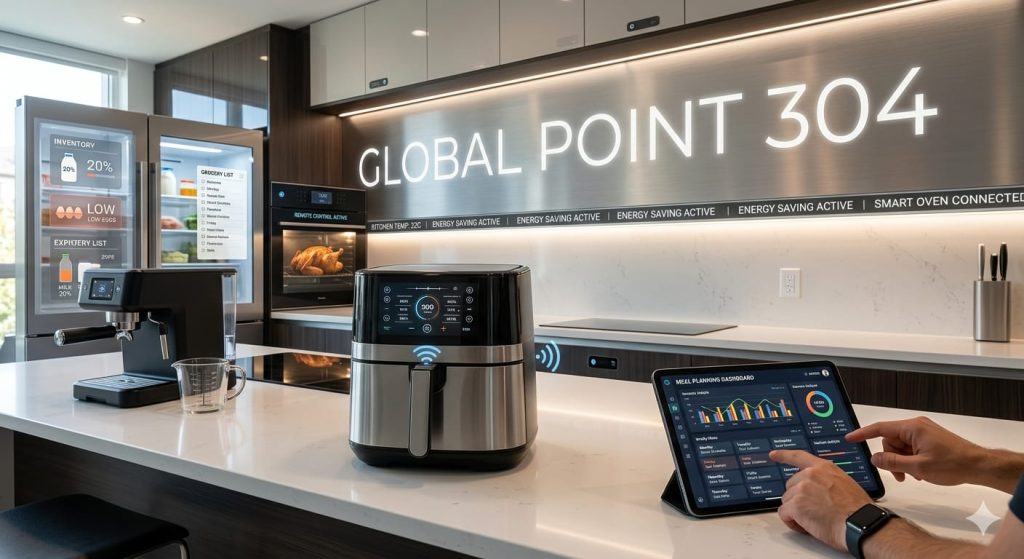
The refrigerator may become the most important device inside Smart Kitchen Technology 2026. A traditional fridge has one job, keeping food cold. A smart fridge tries to do far more.
Modern AI enabled refrigerators use cameras and sensors to identify food, track inventory, send reminders, and suggest recipes. Samsung has continued expanding AI features in its refrigerator lineup, including food recognition and recipe suggestions tied to what is actually stored inside.
Instead of staring at an open fridge wondering what to cook, Smart Kitchen Technology 2026 lets the system suggest a few meal ideas based on what is already there.
Reality check: do not expect perfect recognition. Food gets hidden behind other containers, labels get blocked, and AI still makes mistakes. Human judgement still matters inside Smart Kitchen Technology 2026.
2. AI Assisted Smart Ovens
Smart ovens are moving well past basic temperature control. Many now use cameras, sensors, and software to recognize food and monitor cooking conditions in real time.
Depending on the model, smart ovens under Smart Kitchen Technology 2026 can offer guided cooking, remote monitoring, automatic programs, and cooking notifications sent directly to your phone.
Timing is where most home cooks struggle. Too much heat burns food, too little leaves it raw. Smart Kitchen Technology 2026 reduces some of that guesswork, especially for people newer to cooking.
But AI cannot fully replace judgement. A system may recognize a dish, yet your idea of the perfect browning may differ from someone else’s. Technology assists. The cook still decides.
3. Smart Air Fryers
Air fryers already changed home cooking for millions of people, and the next stage under Smart Kitchen Technology 2026 is making them smarter still.
Connected air fryers now offer digital presets, smartphone control, recipe libraries, and cooking notifications, all built to remove manual guesswork from everyday meals.
An important note belongs here. A device with an app and a few presets is not automatically AI. True intelligence under Smart Kitchen Technology 2026 requires the appliance to use sensor data to adapt behaviour, not just follow a fixed program.
4. Smart Multicookers
Multicookers are already valuable because one device performs several jobs. Under Smart Kitchen Technology 2026, connected multicookers add smartphone control, guided recipes, and cooking notifications.
A busy parent can start dinner, help with homework, and still monitor cooking progress through an app. That is the real promise of Smart Kitchen Technology 2026, not futuristic gadgets but less mental load during a busy evening.
5. Smart Meat Thermometers
This may be the least glamorous entry in Smart Kitchen Technology 2026, yet it is one of the most practical. Wireless smart thermometers track internal temperature and send live updates to your phone.
Instead of repeatedly opening the oven or grill, Smart Kitchen Technology 2026 lets you monitor progress remotely and get an alert the moment your target temperature is reached.
A smart thermometer is a helpful aid, not a replacement for safe food handling. Always follow proper food safety practices regardless of what your device tells you.
6. AI Meal Planners
Not every part of Smart Kitchen Technology 2026 sits on your countertop. AI meal planning software may be one of the most genuinely useful tools in this entire category.
Instead of manually planning seven dinners, you provide details such as family size, available ingredients, cooking time, and budget, and the system generates a workable plan.
We compared this approach in depth in our own AI meal planner versus traditional meal planning guide, and in our roundup of the best AI recipe generators of 2026.
The output from Smart Kitchen Technology 2026 tools is rarely perfect on the first try. But it gives a real starting point, and that alone saves time every single week.
7. Smart Kitchen Scales
A kitchen scale looks simple, but digital scales are becoming genuinely connected inside Smart Kitchen Technology 2026. Smart scales can link measurements with apps and recipe systems automatically.
For baking especially, accuracy matters. A recipe calling for a precise flour quantity cannot always be fixed by simply adding a little more. Smart Kitchen Technology 2026 removes much of that manual calculation.
8. AI Assisted Smart Blenders
Blenders are also entering the connected category. Sensor assisted blenders under Smart Kitchen Technology 2026 can monitor motor load, speed, and ingredient consistency, then adjust blending behaviour automatically.
Most people do not want to stand beside a blender adjusting speed every few seconds. Automation removes that repetitive step, which is exactly what good Smart Kitchen Technology 2026 should do.
9. Smart Coffee Makers
Coffee makers seem like an unlikely fit for AI, but they suit automation well. A connected coffee maker under Smart Kitchen Technology 2026 can schedule brewing, remember preferences, and send notifications when your cup is ready.
Is it essential? No. A smart coffee maker is a convenience purchase. If your current machine already makes coffee you enjoy, an app alone will not make it taste better.
10. AI Food Recognition and Kitchen Vision Systems
This is the most futuristic corner of Smart Kitchen Technology 2026. Computer vision allows cameras to interpret what they see, including ingredients, dishes, cooking stages, and stored items.
Samsung’s Vision AI systems already use cameras for food recognition, and current Smart Kitchen Technology 2026 research shows this trend accelerating across more brands and price points.
Place a tray of food inside the appliance, the camera identifies it, the system suggests a cooking program, and sensors track the process from start to finish. The user still remains fully in control.
Smart vs Truly Intelligent: The Levels of Smart Kitchen Technology 2026
Level 1, Connected: The appliance links to Wi-Fi. Useful, but not real intelligence.
Level 2, Automated: The appliance follows programmed steps. Convenient, still not AI.
Level 3, Sensor Assisted: The appliance gathers data from temperature, weight, or cameras.
Level 4, Adaptive: The system interprets that data and changes its own recommendations. This is where Smart Kitchen Technology 2026 becomes genuinely interesting.
Recent industry outlooks from NielsenIQ highlight this same distinction, pointing to appliance ecosystems as the next real leap within Smart Kitchen Technology 2026, rather than isolated single gadgets.
Smart Kitchen Technology 2026 for Pakistani Homes
A smart appliance built mainly for Western kitchens is not automatically ideal for a Pakistani household, and this matters a great deal for Global Point 304 readers exploring Smart Kitchen Technology 2026 locally.
Before buying, check voltage and plug compatibility, local service availability, spare parts access, whether the companion app works in Pakistan, and what happens to the appliance if the internet connection drops.
Local ingredients matter too. An AI recipe system may suggest items that are expensive or hard to find locally, so it helps to add context directly, such as asking for recipes using ingredients commonly available in Pakistan.
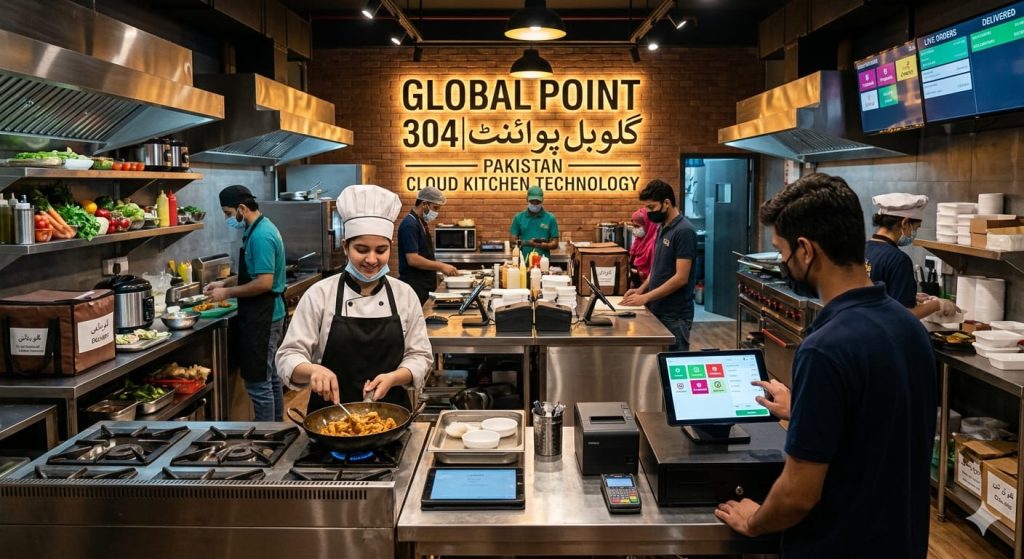
This is also where Global Point 304 tries to add real value. Our cloud kitchen Pakistan 2026 coverage, our piece on food allergy detection technology, and our guide to smart water filter technology all look at Smart Kitchen Technology 2026 through a local lens rather than simply repeating Western marketing claims.
Food Waste and Smart Kitchen Technology 2026
One of the strongest arguments for Smart Kitchen Technology 2026 is reduced food waste. A fridge that tracks inventory reminds you about forgotten ingredients before they spoil, and a meal planner suggests recipes built around what is already there.
Three tomatoes that need using can trigger a curry suggestion, with missing ingredients added straight to a grocery list. That is a far more useful form of Smart Kitchen Technology 2026 than asking a chatbot for random meal ideas.
Energy Efficiency and Smart Kitchen Technology 2026
Connected appliances can offer energy monitoring and scheduling, and this is a growing part of Smart Kitchen Technology 2026. But being smart does not automatically mean using less electricity.
Actual efficiency depends on appliance design, usage habits, cooking time, and household behaviour. Compare real energy specifications rather than trusting the word AI printed on the box.
The Human Touch Still Matters
It is tempting to imagine a future kitchen that cooks everything on its own. But cooking is never only about efficiency. Food is cultural, food is emotional, and food is social.
A family recipe with zero AI involvement can still matter more than the most advanced appliance on the market. Smart Kitchen Technology 2026 should remove the boring parts of cooking, not the meaning behind it.
Humans still decide what to cook, who to cook for, and which memories a meal carries. That is why the smartest kitchen may ultimately be one where the technology stays quietly in the background.
Is Smart Kitchen Technology 2026 Worth Buying?
Buy it if it saves real time, improves consistency, reduces repetitive work, or helps you use ingredients you already own. Avoid it if the AI label is mostly marketing, the app is unreliable, or a simpler appliance already does the same job.
10 AI Gadgets at a Glance
| Gadget | Main Benefit | Best For |
|---|---|---|
| AI Smart Refrigerator | Food tracking and recipes | Families |
| Smart Oven | Guided, adaptive cooking | Frequent cooks |
| Smart Air Fryer | Convenient programs | Quick meals |
| Smart Multicooker | Multiple functions | Busy households |
| Smart Meat Thermometer | Accurate monitoring | Meat and grilling |
| AI Meal Planner | Weekly organization | Families |
| Smart Kitchen Scale | Precise measurement | Baking and meal prep |
| Smart Blender | Automated blending | Smoothies and sauces |
| Smart Coffee Maker | Scheduled brewing | Daily convenience |
| Kitchen Vision System | Food recognition | Future ready kitchens |
Smart Kitchen Technology 2026 is not about filling a kitchen with gadgets for their own sake. It is about choosing the tools that genuinely save time, reduce waste, and fit real households, including the households Global Point 304 writes for every single day.