Workplace Hygiene Issues in 2026: Our National Tragedy and the Need for Change
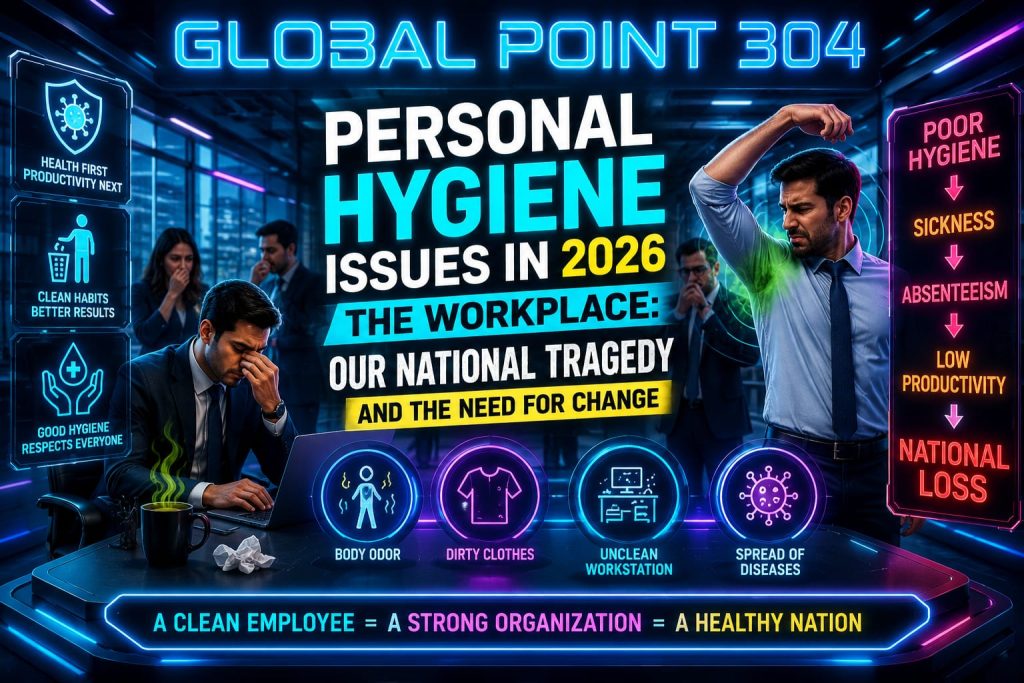
Walk into almost any office, factory floor, or government department across Pakistan today, and you will notice something that rarely makes headlines but quietly shapes everything from productivity to public health: workplace hygiene. It is one of those topics we whisper about in hallway gossip but almost never confront directly in policy, in HR meetings, or in national conversation. And yet, in 2026, workplace hygiene has become nothing short of a national tragedy that deserves urgent, honest attention.
This is not a small or trivial matter. Workplace hygiene affects employee health, team morale, customer perception, and even the international reputation of Pakistani businesses trying to compete in a global economy. When we talk about social reform in this country, we usually picture poverty, education, or the electricity crisis. Rarely do we place workplace hygiene on that same list — but we should, because the consequences ripple through nearly every institution in the country.
Why Workplace Hygiene Deserves National Attention
Workplace hygiene is not simply about body odor or unwashed hands. It represents a much deeper structural problem: inadequate access to clean water, insufficient sanitation infrastructure in offices, cultural silence around discussing hygiene, and a general lack of employer accountability. Global data on water, sanitation, and hygiene (WASH) access consistently shows that a large share of Pakistani households and workplaces still lack a reliable handwashing facility with soap and water, and that gap does not disappear the moment someone walks through an office door.
When workplace hygiene goes unaddressed, the effects are not limited to discomfort. They translate into higher rates of infection transmission, increased absenteeism, reduced concentration, damaged professional relationships, and in some cases, outright discrimination against employees who are perceived — fairly or unfairly — as “unclean.” This is why workplace hygiene should be treated as a public health and human dignity issue, not just an etiquette problem.
The Most Common Workplace Hygiene Issues
Before we can fix anything, we need to name the problem honestly. Based on patterns seen across Pakistani offices, factories, schools, and government buildings, here are the most frequently reported workplace hygiene issues:
- Poor handwashing habits — many employees still do not wash hands after using washrooms or before eating, largely due to missing soap dispensers or broken taps.
- Body odor and inadequate grooming — often linked to long commutes in extreme heat, lack of access to showers, and limited awareness of deodorant use.
- Oral hygiene neglect — bad breath remains one of the most commonly cited but least discussed workplace hygiene issues, especially in customer-facing roles.
- Unclean or worn-out uniforms — particularly in factories, retail, and hospitality, where laundry access is limited.
- Unhygienic washroom conditions — shared washrooms without regular cleaning schedules make it nearly impossible for staff to maintain hygiene even when they want to.
- Lack of hand sanitizer or tissue availability at workstations, reception areas, and shared equipment like keyboards and phones.
- Poor menstrual hygiene management — a subject still treated as taboo in many Pakistani workplaces, leaving women without proper facilities or even basic understanding from management.
Each of these workplace hygiene problems might look small in isolation, but together they create an environment where employees feel embarrassed, unwell, or disrespected — and where the organization’s public image quietly suffers.
The Health Cost of Ignoring Workplace Hygiene
From a purely medical standpoint, poor workplace hygiene is directly linked to the spread of preventable illnesses. Offices and factories are closed, shared environments — the same door handles, shared cutlery in cafeterias, communal washrooms, and air-conditioning systems are touched or breathed by dozens of people every day. When workplace hygiene is not managed, viruses and bacteria spread far more easily, leading to seasonal flu outbreaks, stomach infections, and skin conditions moving rapidly through entire departments.
Public health researchers have long emphasized that hand hygiene compliance in developing countries, including Pakistan, remains far below international recommendations, even among trained healthcare workers, let alone office staff without any hygiene training at all. If professionals whose job depends on hygiene struggle with consistency, it is not surprising that workplace hygiene is even more widespread as a problem in ordinary corporate and industrial settings.
There is also a nutritional and immunity angle worth connecting here. A weak immune system makes employees far more vulnerable to the infections that spread easily wherever workplace hygiene is left unmanaged. We covered this connection in detail in our earlier post on immunity-boosting foods, which pairs well with this discussion — strong immunity combined with better workplace hygiene habits gives employees a much stronger defense against illness.
Why Workplace Hygiene Is Worse in Pakistan
It would be dishonest to discuss workplace hygiene without acknowledging the structural realities unique to Pakistan. Water scarcity is a genuine crisis here, and many offices — especially smaller businesses, schools, and government departments — simply do not have consistent access to clean, running water. Combine that with the cost of soap and cleaning supplies, which many families and small employers consider a “non-essential” expense, and it becomes clear why workplace hygiene remains such a persistent problem.
Cultural silence compounds the issue. Hygiene, especially menstrual hygiene or discussions around body odor, is treated as an embarrassing or even shameful topic rather than a normal health conversation. This silence means workplace hygiene rarely gets addressed through open dialogue, training, or HR policy — it simply gets whispered about, mocked, or ignored until it becomes a bigger issue like a formal complaint or public embarrassment.
Add to this Pakistan’s extreme summer heat, long commutes on crowded public transport, and limited access to workplace showers or changing rooms, and you have a perfect storm of conditions that make poor workplace hygiene almost inevitable unless employers take deliberate action.
The Productivity and Business Cost of Workplace Hygiene
Beyond health, there is a hard business case for solving workplace hygiene problems. Global workforce data consistently shows that unaddressed health and wellbeing issues at work translate directly into higher absenteeism, lower engagement, and measurable productivity loss — the same pattern applies to workplace hygiene, even though it rarely gets named specifically in HR reports.
Consider the ripple effects: an employee dealing with embarrassment over body odor may avoid client meetings. A worker without a clean uniform may lose confidence in customer-facing roles. A team member with recurring stomach infections from an unhygienic office washroom takes more sick leave. Multiply these scenarios across a company of even fifty employees, and workplace hygiene begins to look less like a personal failing and more like an organizational liability that directly hits the bottom line.
For businesses trying to build a professional, internationally competitive image — something increasingly important as Pakistani companies work with foreign clients and remote teams — poor workplace hygiene can quietly undermine years of branding and relationship-building in a single bad impression.
A Social Reform We Cannot Keep Avoiding
At Global Point 304, we have consistently used our Social Reforms category to spotlight issues that Pakistani society tends to overlook — from the electricity crisis to unemployment to climate change. Workplace hygiene deserves a place on that same list. This is not about shaming individuals; it is about recognizing that poor workplace hygiene is, at its root, a reflection of infrastructure gaps, economic pressure, and cultural taboos that no single employee can solve alone.
Real reform requires treating workplace hygiene the same way we treat workplace safety or fire drills — as a shared responsibility between employer and employee, backed by policy, facilities, and education rather than judgment.
Practical Solutions: How Employers Can Fix Workplace Hygiene
Solving workplace hygiene problems does not require massive budgets — it requires intention. Here are concrete steps Pakistani employers can take starting this year:
- Install and maintain handwashing stations with soap and clean water in every washroom, not just executive floors.
- Provide hand sanitizer at entry points, reception desks, and shared equipment areas.
- Create a hygiene policy document that normalizes the conversation instead of leaving it to whispers and complaints.
- Offer uniform laundry support or subsidies for factory and retail staff who cannot easily wash work clothes daily.
- Introduce menstrual hygiene facilities including private disposal bins and access to products in washrooms used by women.
- Schedule regular washroom cleaning with visible accountability logs, similar to international hospitality standards.
- Run short, non-judgmental awareness sessions on hygiene as part of onboarding, framed around health rather than blame.
None of these solutions are expensive by corporate standards, yet together they can dramatically improve workplace hygiene and visibly boost morale, health outcomes, and professional image.
The Government’s Role in Improving Workplace Hygiene
Employers cannot solve this alone. Workplace hygiene is ultimately tied to national water, sanitation, and hygiene (WASH) infrastructure — a responsibility that sits with government policy. Organizations like the World Health Organization and the CDC have published clear, evidence-based hand hygiene guidelines that Pakistani labor departments could adapt into enforceable workplace standards. Similarly, occupational health frameworks like those maintained by OSHA offer a useful model for how hygiene can be treated as a formal safety requirement rather than a personal choice.
Until national labor law explicitly addresses workplace hygiene — mandating basic facilities in every registered business — progress will remain patchy, dependent entirely on individual employer goodwill rather than consistent national standards.
What Employees Can Do Today
While systemic change takes time, individual habits still matter enormously in improving workplace hygiene. Simple, low-cost actions include washing hands before meals and after washroom use, keeping a small hygiene kit at your desk (wet wipes, deodorant, a spare shirt for hot days), speaking to a trusted colleague or HR representative rather than staying silent about washroom conditions, and supporting coworkers rather than mocking them — since shame rarely fixes workplace hygiene, but support and access usually do.
Conclusion: Turning a National Tragedy Into National Progress
Calling poor workplace hygiene a “national tragedy” is not an exaggeration — it is a fair description of what happens when millions of working Pakistanis show up daily to environments that don’t support basic health and dignity. But tragedies can be reversed. With honest conversation, small but consistent employer investment, supportive government policy, and a cultural shift away from shame and silence, workplace hygiene can move from a quiet, chronic problem to a solved chapter in Pakistan’s broader story of workplace reform.
If this topic resonated with you, share it with your HR team, your manager, or a coworker who has been quietly struggling. Real change around workplace hygiene starts with conversations like this one — and Global Point 304 will keep raising the topics that matter, even the ones we’re not used to talking about out loud.
Related read: Best Foods for Immunity