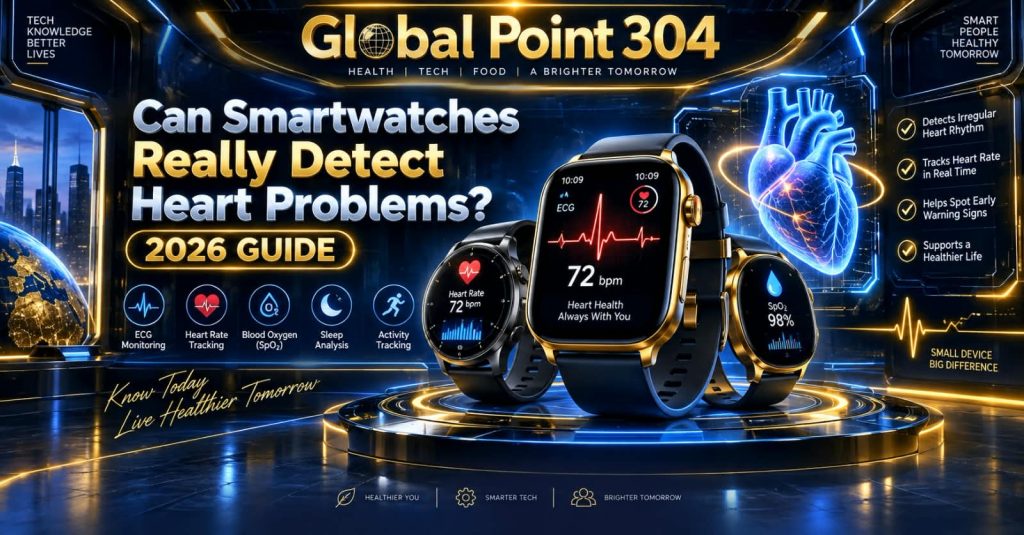
Can Smartwatches Really Detect Heart Problems? 2026 Guide
Category: Health & Tech
Smartwatches have become much more than digital watches
A few years ago, most people bought them to count steps, track workouts, receive notifications, or check the time without reaching for a phone. In 2026, the role of wearable technology has changed significantly
Modern smartwatches can monitor heart rate, record certain types of electrocardiograms, identify unusual heart rhythm patterns, track physical activity, measure sleep-related information, and provide health alerts on compatible devices
This has created an important question for millions of users
Can smartwatches really detect heart problems?
The answer is both yes and no
Some smartwatches can detect certain heart rhythm patterns that may require medical attention. They can also help users notice changes in their usual heart-rate patterns and, on supported devices, record an ECG that can provide useful information to a healthcare professional
However, a smartwatch is not a replacement for a cardiologist, hospital ECG, blood tests, imaging, or emergency medical care
This difference is extremely important
Smartwatch Heart Monitoring is best understood as a health-awareness and early-warning tool rather than a complete medical diagnostic system
According to the World Health Organization, cardiovascular diseases remain the leading cause of death globally, making prevention, early recognition, and appropriate medical care extremely important
In this comprehensive 2026 guide, we will explore how Smartwatch Heart Monitoring works, what modern wearables can detect, what they cannot detect, how accurate they can be, why false alerts happen, and when you should talk to a doctor
What Is Smartwatch Heart Monitoring?
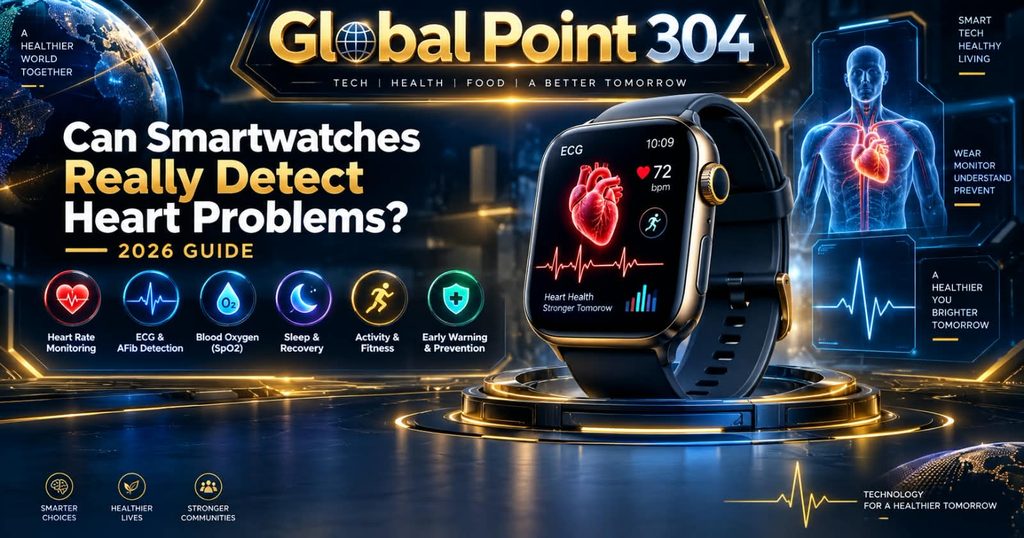
Smartwatch Heart Monitoring refers to the collection and analysis of heart-related information using sensors and software built into a wearable device
Depending on the smartwatch, this may include
- Heart rate monitoring
- Resting heart rate
- High heart-rate alerts
- Low heart-rate alerts
- Irregular rhythm notifications
- ECG or EKG recordings
- Heart-rate trends
- Heart-rate variability information
- Exercise heart-rate tracking
- Recovery and wellness measurements
Not every smartwatch offers all these functions
Some devices focus primarily on fitness
Others include more advanced health sensors and ECG functionality
The important point is that smartwatch capabilities vary by model, software version, regulatory approval, and country
Therefore, users should always check the health features officially supported by their particular device
Why Smartwatch Heart Monitoring Is Becoming Important
Heart problems do not always appear when someone is sitting inside a doctor’s office
Some irregular rhythms can come and go
A person may experience an unusual heartbeat while sleeping, exercising, working, travelling, or relaxing at home
By the time they visit a medical professional, their heart rhythm may have returned to normal
This is where wearable technology can become useful
Smartwatch Heart Monitoring can collect information during everyday life and potentially highlight unusual patterns that deserve further investigation
The American Heart Association explains that wearable heart monitors can contribute to finding atrial fibrillation, and people who receive abnormal rhythm alerts from a smartwatch should tell their healthcare professional
That does not mean a watch is diagnosing the condition by itself
It means the information may become one useful part of a larger medical evaluation, According to the World Health Organization, cardiovascular diseases remain a leading global health challenge.
How Does Smartwatch Heart Monitoring Work?
Modern smartwatches generally use a combination of optical sensors, electrical sensors, motion sensors, and software algorithms
The most common technology is called photoplethysmography, or PPG
What Is PPG?
PPG uses light to detect changes associated with blood flow beneath the skin
The smartwatch shines light into the skin through LEDs
Sensors then measure changes in the reflected light
Every heartbeat changes blood volume in the vessels near the wrist
The device’s algorithms analyze those changes and estimate your pulse rate
This process can happen repeatedly throughout the day
That is one reason Smartwatch Heart Monitoring can be useful for tracking long-term patterns rather than relying on one measurement, The American Heart Association explains how AFib can be evaluated using heart-rhythm monitoring
How ECG Technology Works in a Smartwatch
Some advanced smartwatches also contain electrical sensors capable of recording a single-lead ECG
ECG stands for electrocardiogram
Unlike PPG, which uses changes in blood flow to estimate pulse activity, an ECG records electrical activity associated with the heartbeat
On compatible devices, the user normally touches a designated electrical contact while the watch records the heart’s electrical signal
A recording may take around 30 seconds depending on the device
The result can then be classified by the watch software, with certain systems looking for patterns that may be associated with atrial fibrillation
The American Heart Association explains that ECG testing measures the heart’s electrical activity and is an important part of evaluating AFib
However, a smartwatch ECG is not identical to the multi-lead ECG performed in a clinical setting
That distinction matters
PPG vs ECG: What’s the Difference?
Understanding the difference between these two technologies makes Smartwatch Heart Monitoring much easier to understand
PPG
PPG primarily measures changes related to blood flow
It is useful for continuous or frequent heart-rate monitoring
It can operate passively while you go about your daily routine
ECG
An ECG records electrical activity associated with the heart’s rhythm
On compatible smartwatches, the user usually needs to initiate the recording
An ECG can provide more specific rhythm information than a simple pulse measurement
Neither technology provides a complete picture of cardiovascular health
A smartwatch is monitoring selected signals
A medical examination evaluates the patient as a whole
What Heart Problems Can a Smartwatch Detect?
The answer depends heavily on the device
Some smartwatches can detect patterns associated with irregular heart rhythms
Others can alert users when their heart rate remains unusually high or low
Some can record an ECG that may help identify rhythm abnormalities
The most widely discussed condition in wearable heart monitoring is atrial fibrillation, commonly called AFib
Atrial Fibrillation and Smartwatches
AFib is an irregular heart rhythm that can increase the risk of serious complications, including stroke
One of the challenges with AFib is that it can occur intermittently
Some people experience obvious symptoms
Others may experience little or no noticeable symptoms
This makes continuous or repeated monitoring potentially useful
Smartwatch Heart Monitoring can sometimes identify an irregular pulse pattern and notify the user that further evaluation may be appropriate
The American Heart Association states that heart rhythm information collected by a wearable can help healthcare professionals during the evaluation of AFib
However, an alert is not the same as a diagnosis
If your watch says that your rhythm may be irregular, the appropriate next step is medical evaluation
Can a Smartwatch Detect an Irregular Heartbeat?
Yes, certain devices are designed to identify particular irregular rhythm patterns
The technology generally analyzes pulse or electrical signals and looks for patterns that differ from expected rhythms
A notification might say that an irregular rhythm was detected
This can be useful information
But there are several possible reasons for an unusual reading
Movement can interfere with optical sensors
A loose watch can affect sensor contact
Exercise naturally changes heart rate
Stress can change pulse patterns
Caffeine and other stimulants can also affect heart rate
Therefore, one unusual reading should not automatically be interpreted as evidence of heart disease
Repeated alerts are more important to discuss with a healthcare professional
Can Smartwatches Detect High Heart Rate?
Many smartwatches can provide high-heart-rate alerts
This can be useful when a person’s heart rate remains elevated while they appear to be resting
However, a high heart rate does not automatically mean heart disease
Heart rate can increase because of
- Exercise
- Anxiety
- Stress
- Fever
- Dehydration
- Caffeine
- Certain medications
- Poor sleep
- Illness
- Emotional excitement
This is why Smartwatch Heart Monitoring should always be interpreted in context
A doctor will consider your symptoms, medical history, medications, lifestyle, and other test results
Can Smartwatches Detect a Low Heart Rate?
Some smartwatches can also provide low-heart-rate notifications
A lower resting heart rate can be completely normal for some physically active people
Athletes and highly conditioned individuals may naturally have lower resting heart rates
However, an unusually low heart rate combined with symptoms such as fainting, severe dizziness, weakness, chest discomfort, or shortness of breath deserves medical attention
The number alone is not enough
The symptoms and overall situation matter
Can Smartwatches Detect a Heart Attack?
This is one of the most important questions in this entire article
Do not rely on a smartwatch to detect or rule out a heart attack
A heart attack occurs when blood flow to part of the heart muscle becomes blocked
The World Health Organization describes heart attacks as medical emergencies and emphasizes the importance of recognizing symptoms and reaching emergency care quickly
Symptoms can include chest pressure or discomfort, pain spreading to the arm, shoulder, jaw, neck, or back, shortness of breath, nausea, light-headedness, faintness, or cold sweating
If you experience concerning symptoms, do not wait for your smartwatch to display an alert
Do not keep checking your heart rate
Do not assume that a normal smartwatch reading means everything is fine
Seek emergency medical care
Your symptoms matter more than your watch
Can a Smartwatch Detect Blocked Arteries?
Generally, no
A smartwatch cannot directly look inside your coronary arteries and determine whether an artery is blocked
Coronary artery disease involves blood vessels supplying the heart
Evaluation may require a combination of medical history, physical examination, ECG testing, blood tests, stress testing, imaging, or other clinical investigations depending on the situation
This is a major limitation of Smartwatch Heart Monitoring
A wearable can monitor selected physiological signals
It cannot see the entire cardiovascular system
Can a Smartwatch Detect Heart Valve Problems?
A conventional consumer smartwatch should not be considered a reliable standalone diagnostic tool for heart valve disease
Heart valve problems involve the structure and function of the heart valves
Doctors may use physical examination, ECG testing, echocardiography, and other investigations to evaluate these conditions
However, research is moving quickly
An American Heart Association report from 2025 described preliminary research in which an AI system paired with single-lead smartwatch ECG data detected several types of structural heart disease. The research was presented as preliminary scientific work, not as a universal consumer diagnosis capability
This is an exciting direction for future Smartwatch Heart Monitoring, but consumers should not confuse promising research with a feature automatically available on every smartwatch
Can Smartwatches Detect High Blood Pressure?
This area also requires caution
Heart rate and blood pressure are not the same measurement
A smartwatch may track pulse continuously while not providing a clinically validated blood-pressure measurement
Some wearable ecosystems may work alongside external blood-pressure devices or offer specialized features, but users should verify exactly what their device supports
If you are concerned about hypertension, use an appropriate blood-pressure monitor and consult a healthcare professional
Do not assume that a normal smartwatch heart rate means your blood pressure is normal
What Is Heart Rate Variability?
Heart-rate variability, or HRV, refers to variations in the time between individual heartbeats
Modern wearable devices often provide HRV-related information as part of broader wellness features
HRV can be influenced by stress, sleep, physical activity, illness, recovery, and other factors
It can therefore be useful for observing personal trends
However, a single HRV number should not be interpreted as a diagnosis of heart disease
The best approach is to look at trends over time
How Accurate Is Smartwatch Heart Monitoring?
There is no single accuracy percentage that applies to every smartwatch
Different devices use different sensors
Different algorithms process the data differently
Different health features have different levels of validation
Measurement conditions also matter
For example, movement can interfere with optical readings
A loose strap can reduce sensor contact
Sweat may affect measurements
Skin characteristics and device positioning can also influence readings
This means Smartwatch Heart Monitoring should be treated as useful health information rather than perfect medical measurement
The technology can be impressive without being infallible
Why Smartwatch Readings Can Sometimes Be Wrong
Imagine running on a treadmill
Your wrist is moving rapidly
Your skin is sweaty
Your watch is shifting slightly
The sensor is trying to distinguish heart-related signals from movement-related changes
This is not an easy technical problem
For this reason, readings during intense exercise may sometimes differ from measurements taken while sitting quietly
For a deliberate ECG recording, following the manufacturer’s instructions and remaining still can improve the quality of the recording
A smartwatch should also fit securely without being uncomfortably tight
Can Smartwatch Heart Monitoring Find AFib Without Symptoms?
Potentially, yes
This is one of the most important benefits of wearable rhythm technology
Some people with AFib may not realize that they have an irregular rhythm
A smartwatch can potentially identify an unusual pattern during normal daily life
The American Heart Association notes that wearable data can contribute to AFib diagnosis and recommends telling a healthcare professional about abnormal rhythm alerts
However, the next step remains important
The alert needs appropriate clinical interpretation, The American Heart Association’s AFib guidance explains how abnormal heart rhythms can be evaluated.
What Should You Do After an Irregular Rhythm Alert?
First, stay calm
A notification does not automatically mean you have a serious heart condition
Read the alert carefully
If your smartwatch provides an ECG function, follow the manufacturer’s instructions to take a recording
Save the recording if possible
Write down any symptoms you experienced
Then contact a healthcare professional if the alert is repeated or concerning
Your doctor may recommend an ECG, ambulatory heart monitor, blood tests, or other evaluation
The American Heart Association notes that longer-term monitors such as Holter monitors can capture abnormal rhythms that may not appear during a short clinical ECG
This shows why a smartwatch and medical monitoring can complement one another
Smartwatch Heart Monitoring vs Hospital ECG
A smartwatch ECG and a hospital ECG should not be treated as identical
A smartwatch may record a single-lead ECG
A clinical ECG typically uses multiple electrodes to examine the heart’s electrical activity from several perspectives
The clinical test provides much more information
A smartwatch can be useful because it is convenient
A hospital ECG is useful because it is designed for clinical evaluation
The two technologies have different roles
Smartwatch Heart Monitoring During Exercise
Fitness tracking remains one of the most popular smartwatch features
During exercise, Smartwatch Heart Monitoring can show how your heart rate changes as your activity level increases
This can help users understand workout intensity and recovery
For example, you may notice that your heart rate rises during a run and gradually decreases after stopping
Long-term tracking can help you understand your personal fitness patterns
But unusual symptoms should never be ignored
If exercise repeatedly causes chest pain, fainting, severe breathlessness, or unusual palpitations, seek medical advice
A smartwatch should never be used as permission to continue exercising through serious symptoms
Smartwatch Heart Monitoring and Sleep
Sleep is increasingly connected with wearable health technology
Many smartwatches estimate sleep duration and provide information about sleep patterns
Some devices also monitor heart rate during sleep
This can provide useful personal information
However, sleep-related measurements from consumer devices should not automatically be treated as medical diagnoses
If you experience persistent loud snoring, breathing interruptions during sleep, excessive daytime sleepiness, or other concerning symptoms, talk to a healthcare professional
Stress and Heart Rate
Your heart responds to many things happening throughout the day
Stress can influence heart rate
Poor sleep can influence recovery
Physical activity changes cardiovascular demand
Illness can change your usual measurements
This is why looking at multiple health signals can sometimes be more useful than focusing on one number
Global Point 304′s health and technology coverage explores this wider relationship between digital habits and well-being
For example, readers can explore our articles on smartphones and mental health and youth mental health and social media
Nutrition and Heart Health
Technology is only one part of cardiovascular wellness
Food choices remain extremely important
The World Health Organization identifies unhealthy diet, physical inactivity, tobacco use, and harmful alcohol use among major behavioral cardiovascular risk factors
This is why wearable health technology should be combined with healthy lifestyle choices.
Global Point 304 also covers technology-assisted nutrition
Readers can explore our AI meal planner vs traditional meal planning article to understand how AI is changing meal organization
You can also discover the best AI recipe generators of 2026 for technology-assisted cooking ideas
Smart Kitchen Technology and Healthy Living
The digital-health revolution is expanding beyond wearable devices
Connected kitchen appliances are becoming part of modern lifestyles
Our coverage of smart kitchen tech and smart kitchen technology in 2026 explores how technology is changing food preparation
Readers interested in Pakistan’s food-tech sector can also explore cloud kitchen developments in Pakistan
These topics may seem separate from heart monitoring, but they are connected through one larger idea
Technology is increasingly becoming part of everyday health behavior
Food Labels and Cardiovascular Choices
Understanding what is inside packaged food can also support healthier decision-making
Our Food Labels Explained guide explores ingredients, calories, and hidden sugars
Technology can help monitor activity
Food knowledge can help guide nutrition
Together, these tools can support a more informed lifestyle
For people interested in emerging food technology, Global Point 304 also covers food allergy detection technology
Hydration and Smart Technology
Hydration is another part of everyday wellness
Smart home technology is also becoming increasingly connected with health and lifestyle
Our article on smart water filter technology explores how connected water technology is developing
Again, no single device can guarantee good health
A healthier lifestyle comes from many small decisions working together
Smartwatch Heart Monitoring and Digital Healthcare
Wearable devices are increasingly becoming part of the broader digital-health ecosystem
Health data can potentially support remote monitoring and communication between patients and healthcare professionals
This is especially interesting in regions where access to healthcare may vary significantly.
Global Point 304 has explored this trend through its article on AI in Pakistani healthcare in 2026
The growing digital health market in 2026 is another example of how healthcare technology is evolving
The future may involve greater integration between wearables, smartphones, healthcare platforms, and clinical systems
What Could Smartwatch Heart Monitoring Look Like in the Future?
The next generation of wearables could become significantly more capable
Artificial intelligence may improve the interpretation of heart signals
Machine learning may identify patterns that are difficult to recognize manually
Wearable sensors may become smaller and more power-efficient
Health platforms may combine heart-rate data with sleep, activity, environmental, and lifestyle information
Researchers are already exploring AI-assisted analysis of smartwatch ECG data for conditions beyond traditional rhythm monitoring
However, future possibilities should not be confused with today’s consumer capabilities
A research result is not automatically a commercial medical feature
Smartwatch Heart Monitoring in Pakistan
Pakistan represents an interesting market for wearable health technology
Smartphones have become deeply integrated into everyday life, and wearable devices are becoming more visible among fitness enthusiasts, professionals, students, and health-conscious consumers
Wearables may provide useful personal health information, particularly for people interested in fitness and preventive awareness
But access to medical care remains essential
A smartwatch can collect data
A doctor interprets that data in the context of the patient
This distinction is particularly important when discussing health technology online
How to Improve Smartwatch Heart Monitoring Accuracy
You can take several simple steps to improve the usefulness of your readings
Wear the Watch Correctly
The device should have consistent skin contact
Avoid wearing it excessively loose
Keep the Sensor Clean
Sweat, dirt, and lotions may interfere with sensor contact
Stay Still During ECG Recording
Movement can reduce the quality of an ECG recording
Sit comfortably and follow the device’s instructions
Build a Personal Baseline
Pay attention to your normal resting heart-rate patterns
Knowing your baseline makes meaningful changes easier to notice
Do Not Obsess Over Every Reading
Health technology should provide useful information rather than unnecessary anxiety
Look for patterns
Discuss concerning changes with a healthcare professional
Common Mistakes People Make With Smartwatch Heart Monitoring
Mistake 1: Treating Every Alert as a Diagnosis
An alert is not a medical diagnosis
It is a signal that may deserve further investigation
Mistake 2 : Assuming a Normal Reading Means You Are Completely Healthy
A smartwatch cannot evaluate every aspect of cardiovascular health
A normal reading does not rule out all heart conditions
Mistake 3: Ignoring Symptoms
This is potentially the most dangerous mistake
If you have serious symptoms, seek medical care even if your smartwatch says everything looks normal
Mistake 4 : Comparing Your Numbers With Someone Else
Heart-rate patterns differ between individuals
Age, fitness, medications, health conditions, sleep, stress, and many other factors can influence readings
Mistake 5 : Believing All Smartwatches Have the Same Technology
They do not
Different devices have different sensors, software, capabilities, and regulatory status. For additional information about wearable cardiovascular technology, readers can review relevant FDA information.
When Should You Contact a Doctor?
Consider discussing your smartwatch data with a healthcare professional if
- You repeatedly receive irregular rhythm alerts
- Your resting heart rate changes significantly from your usual pattern
- You experience unexplained palpitations
- You repeatedly experience dizziness
- You have fainting episodes
- You notice unusual symptoms during exercise
- Your smartwatch records repeated abnormal ECG results
A healthcare professional may decide whether additional testing is appropriate
When Is Emergency Care Necessary?
Never depend on Smartwatch Heart Monitoring when you are experiencing potentially serious symptoms
Seek emergency medical help if you experience symptoms such as
- Severe or persistent chest pain or pressure
- Shortness of breath
- Fainting
- Severe dizziness
- Cold sweating
- Sudden weakness
- Pain spreading to the arm, shoulder, jaw, neck, or back
- Symptoms suggesting a stroke
The WHO states that people experiencing heart-attack symptoms should seek medical care immediately
A smartwatch notification is not required for an emergency to be real
Your symptoms should always take priority
Smartwatch Heart Monitoring: Benefits and Limitations
Potential Benefits
Continuous Awareness
A smartwatch can provide frequent heart-rate information throughout the day
Possible Rhythm Alerts
Some devices can identify patterns associated with irregular rhythms
ECG Recording
Compatible models can provide single-lead ECG recordings
Personal Trends
Long-term data can help users understand their individual patterns
Exercise Tracking
Heart-rate data can complement fitness and activity tracking
Useful Medical Information
Saved ECGs and alerts may provide additional information for healthcare professionals
Important Limitations
Not a Complete Diagnostic System
A smartwatch cannot diagnose every cardiovascular condition
Not a Replacement for Doctors
Clinical evaluation remains essential
Not a Heart-Attack Detector
Never rely on a smartwatch to rule out a heart attack
Potential False Alerts
Movement and other factors can sometimes affect measurements
Device Differences
Features and accuracy vary between models
Regional Availability
Certain health features may not be available in every country
Frequently Asked Questions
Can a smartwatch really detect heart problems?
Some smartwatches can detect or flag certain heart-rate and rhythm abnormalities. They cannot detect every type of heart problem
Can a smartwatch detect AFib?
Some compatible devices can identify patterns associated with possible AFib. A healthcare professional should confirm any suspected diagnosis
Can a smartwatch detect a heart attack?
You should never depend on a smartwatch to detect or rule out a heart attack. Emergency symptoms require immediate medical care
Can smartwatch ECG replace a hospital ECG?
No. A smartwatch ECG and a clinical ECG have different purposes and configurations. A smartwatch ECG may provide useful rhythm information, but it is not a replacement for a clinical evaluation
Is Smartwatch Heart Monitoring accurate?
It can provide useful information, but accuracy varies according to the device, sensor, activity level, fit, software, and measurement type
What should I do if my smartwatch says I have an irregular rhythm?
Do not panic. Save the reading or ECG if possible and contact a healthcare professional for appropriate evaluation, particularly if alerts continue or you have symptoms
Can healthy people benefit from Smartwatch Heart Monitoring?
Yes. Healthy users can use wearable technology to understand activity, resting heart-rate patterns, exercise response, and other wellness trends
Can a smartwatch detect blocked arteries?
A consumer smartwatch cannot directly visualize coronary artery blockages. Coronary artery disease requires appropriate clinical assessment
Can Smartwatch Heart Monitoring prevent heart disease?
A smartwatch itself does not prevent heart disease. However, health tracking may encourage physical activity, awareness, and healthier lifestyle choices
Final Verdict: Can Smartwatches Really Detect Heart Problems?
So, can smartwatches really detect heart problems?
They can detect certain heart-related patterns, but they cannot diagnose every heart problem
That is the most accurate way to understand the technology.
Smartwatch Heart Monitoring can provide valuable information about heart rate and, on supported devices, certain rhythm patterns
It may alert users to possible irregular rhythms
It can help establish personal trends
It can provide ECG recordings that may be useful during a medical consultation
But it cannot replace a cardiologist
It cannot replace a hospital ECG
It cannot replace appropriate blood tests or imaging
And it should never be used to decide whether emergency symptoms are serious
The technology is still developing rapidly
Research into AI and wearable ECG data is opening new possibilities, including exploration of structural heart conditions
That makes the future of Smartwatch Heart Monitoring extremely interesting.
Global Point 304 is committed to covering this intersection between health, technology, artificial intelligence, and everyday life in a way that helps readers understand both the opportunities and limitations of emerging technology
The smartest way to use a smartwatch is not to treat it like a doctor
Use it as an additional source of information
Wear it correctly
Understand its limitations
Pay attention to meaningful patterns
Keep track of concerning alerts
Share relevant information with your healthcare professional
And most importantly, listen to your body
If you have serious symptoms, seek medical care rather than waiting for your watch to tell you something is wrong
In 2026, Smartwatch Heart Monitoring is becoming an increasingly important part of the digital-health conversation
The technology can watch your wrist
It can collect useful information
It can sometimes provide an early warning
But when it comes to diagnosing and treating heart disease, human medical expertise remains essential
Technology can support healthcare. It should never replace it
Trusted Sources for Further Reading
For readers who want reliable medical information, the following authoritative sources provide additional guidance
- American Heart Association: AFib diagnosis and wearable heart monitoring
- World Health Organization: Cardiovascular diseases
- World Health Organization: Heart attack symptoms and emergency care
- American Heart Association: Cardiac event and ambulatory monitoring
Medical Disclaimer
This article is for general educational and informational purposes only. It is not medical advice, diagnosis, or treatment. Smartwatch readings can be affected by device limitations and measurement conditions. If you have concerning symptoms or receive repeated abnormal health alerts, consult a qualified healthcare professional. In an emergency, seek immediate medical care