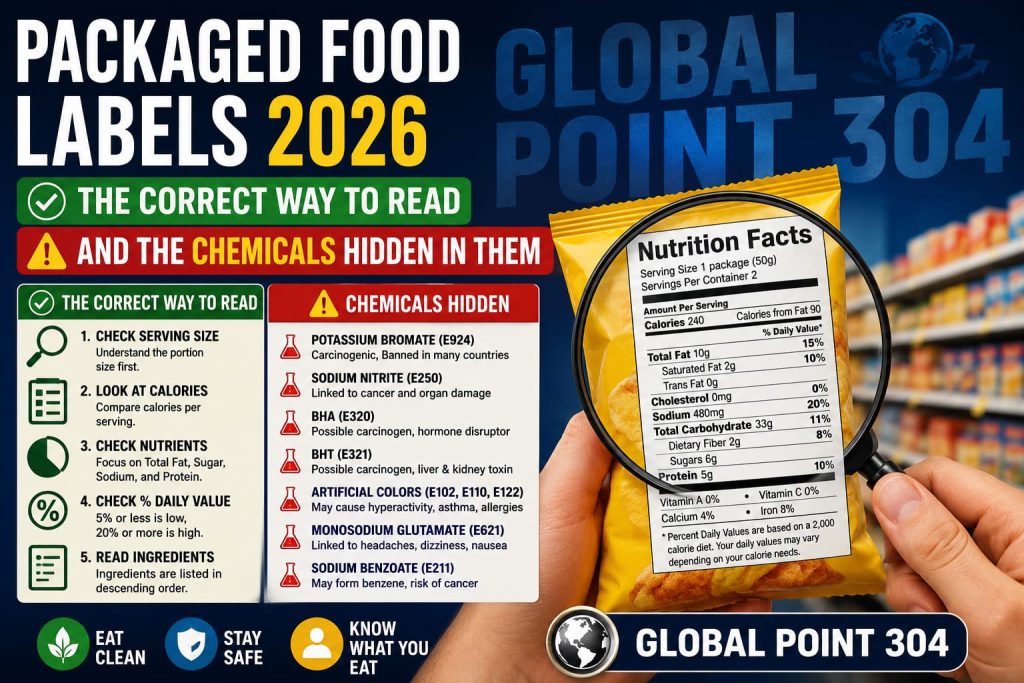
Food Labels Explained: How to Read Ingredients, Calories & Hidden Sugars
Have you ever picked up a packet of cereal, biscuits, yogurt, juice, chips, or a “healthy” snack and wondered what all those numbers and unfamiliar ingredients actually mean?
You are not alone
Food packaging is designed to catch our attention. Words such as “natural,” “light,” “low fat,” “multigrain,” “fitness,” “energy,” and “no added sugar” can make a product appear healthier at first glance. But the real story is often hidden in the small print on the back or side of the package
That is where Food Labels Explained becomes important
A food label can tell you much more than the product name. It can help you understand serving size, calories, protein, carbohydrates, fats, sugars, sodium, fiber, vitamins, minerals, and ingredients
More importantly, learning how to read a food label can help you compare products instead of simply trusting attractive packaging
For families, students, working professionals, parents, athletes, and anyone trying to make better food choices, label-reading is a practical everyday skill
At Global Point 304, our goal is to make useful Food & Tech information easier to understand. This guide focuses on the information you can actually use while shopping, preparing meals, or planning a healthier routine
What Are Food Labels?
Food labels are the information printed on packaged food and beverages. Depending on the country and product, labels may provide nutritional information, ingredient details, serving information, allergen warnings, storage instructions, manufacturer information, dates, and other important details
The nutrition panel is particularly useful because it gives you a snapshot of what you are consuming
The ingredient list tells a different story. It shows what the product is made from and can help you identify added sugars, oils, sweeteners, flavorings, preservatives, and other ingredients
This is why Food Labels Explained should not mean looking at only the calorie number
A product with fewer calories is not automatically the best choice. Likewise, a product with more calories is not automatically unhealthy
The overall nutritional profile matters
The World Health Organization recommends a healthy dietary pattern based on adequacy, balance, moderation, and diversity. It also emphasizes minimally processed and unprocessed foods, while recommending limits on free sugars, unhealthy fats, and sodium.

Why Reading Food Labels Matters
Imagine you are standing in a supermarket choosing between two breakfast cereals.
One package says
“High Energy”
“Natural Goodness”
“Made with Whole Grains”
The other package looks less impressive
If you only look at the front, you might automatically choose the first product
But when you turn the box around, you discover that the attractive product contains significantly more sugar per serving
This simple example shows why Food Labels Explained is more useful than marketing language alone
The front of a package is designed to sell the product
The nutrition panel is designed to provide nutritional information
Learning to read both sides of the package gives you a much clearer picture
Start With the Serving Size
One of the biggest mistakes people make when reading nutrition information is ignoring serving size
A label may say that one serving contains 120 calories
That sounds reasonable
But what if the package contains three servings and you normally eat the entire package?
You have not consumed 120 calories
You have consumed approximately 360 calories
This is one of the most important principles in Food Labels Explained.
Always ask
“How many servings are in this package?”
Then ask
“How much do I actually eat?”
Serving sizes are reference amounts used for nutritional information. They are not necessarily a recommendation for how much you personally should eat
The NHS also warns that a manufacturer’s portion may differ from the amount a person actually consumes
Calories: What Do They Really Mean?
Calories measure energy
Your body needs energy to breathe, move, maintain body temperature, support organs, and perform everyday activities
However, calorie needs vary from person to person
Age, body size, activity level, lifestyle, and other factors can influence energy requirements
This means calorie information should be viewed in context
If a snack contains 250 calories, that number alone does not tell you whether the snack is a good or bad choice
You also need to consider protein, fiber, sugar, saturated fat, sodium, and the overall ingredient list
A 250-calorie food rich in protein and fiber may affect fullness differently from a 250-calorie sugary snack
This is another reason Food Labels Explained should focus on the whole label rather than one number
Calories Per Serving vs Calories Per Package
This deserves special attention
Suppose a packet of cookies contains
Calories per serving: 150
Servings per package: 4
If you eat the whole packet, your total intake is approximately
150 × 4 = 600 calories
The same principle applies to beverages, snack packs, frozen foods, instant meals, desserts, and breakfast products
Always check whether the nutrition information applies to the entire package or only one serving.
Understanding Total Fat
Fat is an essential nutrient
Your body needs certain fats for normal biological functions, including supporting cells and helping absorb some vitamins
The important question is not simply
“Does this product contain fat?”
Instead, ask
“What type of fat does it contain, and how much?”
Nutrition labels may list total fat, saturated fat, and sometimes trans fat
Saturated and trans fats deserve particular attention because health authorities recommend limiting them as part of a balanced diet
The WHO recommends shifting fat intake away from saturated and trans fats toward unsaturated fats.
Saturated Fat
Saturated fat can be found in many animal-based foods and some plant oils
A food containing saturated fat is not automatically forbidden
Instead, think about frequency, quantity, and your overall dietary pattern
When comparing similar products, the nutrition label can help you identify which option contains less saturated fat
The NHS provides general reference thresholds for identifying foods high or low in saturated fat per 100 grams
Trans Fat
Trans fat is another reason to inspect the nutrition and ingredient information
Industrial trans fats have been associated with negative health effects, and the WHO recommends their elimination from the food supply where possible
When comparing processed foods, checking the label and ingredient list can help you make more informed choices
Carbohydrates: More Than Just Sugar
Carbohydrates are an important source of energy
But carbohydrates are not all the same
A product may contain carbohydrates from whole grains, vegetables, fruit, pulses, refined grains, added sugars, or combinations of these
That is why Food Labels Explained should include both total carbohydrates and the ingredients behind them
Look at the total carbohydrate number
Then check dietary fiber and sugars
If available, also check added sugars
A carbohydrate-rich food with substantial fiber may be a different nutritional choice from one dominated by added sugars
The WHO recommends that carbohydrates should primarily come from whole grains, vegetables, fruits, and pulses
Dietary Fiber
Fiber is often overlooked
It is found naturally in foods such as whole grains, beans, lentils, vegetables, fruits, nuts, and seeds
When comparing packaged foods, checking fiber can be useful
For example, two breakfast products might have similar calorie counts, but one may provide significantly more fiber
That difference can matter when building a balanced diet
However, a product should not automatically be considered healthy simply because it contains added fiber
Read the complete ingredient list as well
The Most Important Part: Understanding Sugar
Sugar is one of the most confusing parts of food labeling
A label may show
Total sugars
Added sugars
Sometimes a product contains naturally occurring sugars and added sugars together
Milk naturally contains lactose
Fruit naturally contains sugars
At the same time, manufacturers can add sugars to processed foods and drinks
The FDA explains that total sugars include naturally occurring sugars plus added sugars, while added sugars are separately identified on the Nutrition Facts label in applicable labeling systems
This distinction is central to Food Labels Explained
Total Sugar vs Added Sugar
Suppose a yogurt contains
Total sugars: 15 grams
Added sugars: 7 grams
The remaining sugar may come from naturally occurring lactose or other sources
The numbers should therefore not be interpreted as meaning that all 15 grams were added during manufacturing
The ingredient list can provide additional context
When a product lists added sugars, this information can make comparisons much easier
The FDA uses 50 grams per day as the Daily Value for added sugars based on a 2,000-calorie diet, and identifies 5% Daily Value or less as low and 20% or more as high for added sugars
These are reference values, not personalized targets for every person
Hidden Sugars in Ingredient Lists
One of the biggest reasons consumers struggle with sugar is that it does not always appear simply as “sugar.”
Sugar-containing ingredients can have different names
Examples may include
Sucrose
Glucose
Fructose
Dextrose
Maltose
Corn syrup
Glucose syrup
Rice syrup
Maple syrup
Honey
Molasses
Fruit juice concentrate
Syrups
This does not mean every ingredient with a scientific-sounding name is dangerous
It simply means that understanding ingredient terminology can help you identify sources of sweetness
A long ingredient list may contain several different sweetening ingredients
For example, a product might contain sugar, syrup, and fruit concentrate at different points in the ingredient list
That is why Food Labels Explained requires looking beyond the large marketing claims on the front
Ingredients Are Usually Listed in Order
The ingredient list can tell you something very useful
Ingredients are generally listed in descending order by weight under many food-labeling systems
This means ingredients appearing near the beginning of the list can make up a larger proportion of the product than ingredients appearing later
Consider a fictional breakfast product with this ingredient list
Whole grain oats, sugar, wheat flour, vegetable oil, raisins, salt, flavoring
Sugar appears very early
Now compare it with
Whole grain oats, raisins, nuts, seeds, cinnamon, salt
The second ingredient list gives you a very different impression
This is why Food Labels Explained should always involve the ingredient list as well as the nutrition panel
“Natural” Does Not Automatically Mean Healthy
The word “natural” can sound reassuring
But “natural” does not tell you everything about the nutritional profile of a product
A naturally derived sweetener can still contribute sugar
A product made with natural ingredients can still be high in calories
A natural food can also contain substantial sodium or saturated fat depending on the product
Instead of relying on one attractive word, check the complete label
“No Added Sugar” Needs Context
“No added sugar” does not necessarily mean “sugar-free.”
A product may naturally contain sugar
For example, a fruit-based product can contain naturally occurring sugars without having sugar added during processing
The total sugar number therefore still matters
This is a common source of confusion when consumers first learn Food Labels Explained
Always compare total sugars, added sugars where listed, ingredients, serving size, and the overall product
“Low Fat” Is Not the Same as “Healthy”
Low-fat marketing can also be misleading if interpreted too broadly
When some products reduce fat, manufacturers may alter the formulation in other ways
Depending on the product, this could involve additional starches, sweeteners, or other ingredients
That does not automatically make the product unhealthy
It simply means that “low fat” should not be the only factor in your decision
Read the label
What Does % Daily Value Mean?
The percentage Daily Value can help you understand how much a nutrient contributes to a daily reference amount
It is especially useful when comparing similar products
For example, if one product provides a much higher percentage of sodium per serving than another, that difference can help guide your choice
The FDA explains that Daily Values are reference amounts used to help consumers understand nutrient contributions within a daily diet
Remember that Daily Value systems can vary by country and labeling rules
Always consider the labeling standard used on the package you are reading
Sodium and Salt
Sodium is another ingredient that deserves attention
Many packaged foods can contain significant amounts of sodium, including sauces, instant meals, processed meats, snacks, soups, and some ready-to-eat foods
A food does not necessarily have to taste extremely salty to contain sodium
This makes the nutrition panel useful
The WHO recommends limiting sodium intake and notes that excessive sodium intake is associated with health risks
The NHS also provides label-based guidance for identifying foods high or low in salt and sodium
When comparing similar products, choose the option with a more suitable sodium or salt profile for your dietary needs
Why “Per 100g” Can Be Helpful
Serving sizes can vary significantly between brands
One company might define a serving as 30 grams
Another might use 50 grams
That can make direct comparison difficult
Information provided per 100 grams or 100 milliliters can make comparisons easier because the reference amount is standardized
This is another important lesson from Food Labels Explained
If you are comparing two similar products, check their values per 100 grams or 100 milliliters when available
This can give you a clearer comparison than serving information alone
A Simple Example of Comparing Two Products
Imagine you are choosing between two breakfast cereals
Product A
Calories: 120 per serving
Sugar: 12g
Fiber: 2g
Protein: 2g
Product B
Calories: 130 per serving
Sugar: 5g
Fiber: 5g
Protein: 4g
Product B has slightly more calories
But it also contains less sugar, more fiber, and more protein
If those factors matter to your dietary goals, Product B may be worth considering
The lesson is simple
Do not automatically choose the product with the lowest calorie number
Compare the entire nutritional profile
How to Read Food Labels in 30 Seconds
You do not need to spend ten minutes in every supermarket aisle
With practice, you can scan a label quickly
Start with serving size
Then check calories
Look at added sugars or total sugars
Check saturated fat
Check sodium or salt
Look at fiber and protein
Finally, scan the ingredient list
This quick routine can make Food Labels Explained much easier to apply in real life
A Five-Question Food Label Test
Before buying a packaged product, ask yourself five questions
1. How much is one serving?
2. How many servings will I actually eat?
3. How much added or total sugar does it contain?
4. Is it high in saturated fat or sodium?
5. What are the first several ingredients?
If you can answer these questions, you already understand a large part of the label
Be Careful With Health Claims
Food packaging can include many claims.
Examples include:
High protein
Source of fiber
Low fat
Reduced sugar
No added sugar
Whole grain
Natural
Light
Organic
These claims may have specific regulatory meanings depending on the country
However, they should not replace your own evaluation of the complete nutritional information
A product can make a positive claim about one nutrient while being less attractive in another area
For example, a snack could be high in protein but also contain substantial sodium
A cereal could be high in fiber but contain added sugar
A beverage could have no added sugar but still contain naturally occurring sugars
This is why Food Labels Explained means learning to see the complete picture
Food Allergens and Ingredient Awareness
Ingredient lists are particularly important for people with food allergies or specific dietary restrictions
Depending on local regulations, common allergens may be emphasized separately or highlighted within ingredient information
Always read the packaging carefully
Do not rely only on the product’s front label
If you have a diagnosed food allergy or medically necessary dietary restriction, follow guidance from a qualified healthcare professional and check the manufacturer’s current allergen information
Technology can also help consumers understand food ingredients
For more information about how technology is being used in food safety and allergy awareness, explore Global Point 304′s article on [Food Allergy Detection Technology]
Food Allergy Detection Technology
Food Labels and Smart Kitchen Technology
Food labeling is becoming increasingly relevant in the world of connected kitchens
Smart kitchen devices, recipe applications, meal-planning platforms, barcode scanners, and AI-powered food tools can potentially make nutritional information easier to organize
Technology does not replace good judgment
Instead, it can reduce the effort involved in collecting and comparing information
If you are interested in the growing relationship between food and technology, Global Point 304 has also covered smart kitchen developments
You can also read
Using AI for Better Meal Planning
AI tools are increasingly being used to create meal ideas, organize recipes, and support food planning
However, an AI-generated meal plan should still be checked against real nutritional information
If an AI tool suggests a packaged product, you can use the actual food label to verify calories, ingredients, sugar, sodium, protein, and other information
Global Point 304 explores this topic in more detail in
AI Meal Planner vs Traditional Meal Planning
Understanding Food Labels Explained can therefore make AI-powered food recommendations more useful because you can independently evaluate the products or ingredients being suggested
AI Recipe Generators and Food Decisions
AI recipe generators can provide creative meal ideas, especially when you have ingredients already available at home
But recipes are different from packaged food
A recipe may tell you what ingredients to use, while a packaged food label tells you what is already inside a manufactured product
Both types of information can work together
For more information, explore
Best AI Recipe Generators 2026
Cloud Kitchens and Food Transparency
The modern food industry is also changing through cloud kitchens and technology-enabled food businesses
As online food ordering becomes more common, consumers may have less direct interaction with packaging
This makes clear nutritional information increasingly valuable
Consumers should ideally be able to understand what they are ordering, particularly when dealing with allergens, calories, ingredients, or dietary restrictions
Global Point 304 also examines developments in Pakistan’s cloud kitchen environment
Smart Water and Food Choices
Healthy food decisions are not limited to packaged food
Water quality also plays an important role in everyday household routines
Technology is increasingly being used to monitor and improve household water filtration
You can read Global Point 304’s related article
The broader lesson is that food, water, technology, and consumer awareness are increasingly connected
Food Labels Explained for Parents
Parents often shop for multiple people at once
A colorful package can easily attract a child’s attention
Instead of banning every snack, parents can teach children simple label-reading skills
Start with three questions
How much sugar is there?
How much fiber is there?
What are the first ingredients?
Older children can gradually learn about calories, protein, sodium, saturated fat, and serving sizes
The goal is not to create fear around food
The goal is to build confidence
Food Labels Explained for Students
Students often rely on quick snacks, packaged foods, instant meals, and drinks because of busy schedules
Learning label-reading can help students make more informed choices without requiring a complicated diet
A student might compare two drinks and discover that one contains substantially more added sugar
Another might compare two instant meals and notice a significant difference in sodium
These small decisions can become useful habits over time
Food Labels Explained for Busy Professionals
Busy professionals often make food decisions quickly
A practical strategy is to identify a few label features that matter most to you
For example
Serving size
Protein
Fiber
Added sugar
Sodium
Saturated fat
Then use these consistently when comparing similar products
You do not need to memorize every nutrition fact
You simply need a repeatable system
Food Labels Explained for Grocery Shopping
Try this simple supermarket strategy
First, choose two or three similar products
Second, ignore the front packaging for a moment
Third, compare serving size
Fourth, compare sugar
Fifth, compare protein and fiber
Sixth, compare saturated fat and sodium
Finally, scan the ingredients
This approach turns shopping into a simple comparison rather than an advertising competition
Common Food Label Mistakes
Mistake 1: Looking Only at Calories
Calories matter, but they do not tell the entire story
Mistake 2: Ignoring Serving Size
Eating two servings means consuming approximately twice the listed nutrition values
Mistake 3: Trusting “Healthy” Packaging
Marketing language can create a health impression that requires verification
Mistake 4: Ignoring Added Sugars
Added sugar can appear in many forms
Mistake 5: Ignoring Sodium
Some packaged foods can contain substantial sodium even when they do not taste extremely salty
Mistake 6: Reading Only the Front
The ingredient list and nutrition panel often provide much more useful information.
Mistake 7: Assuming Expensive Means Better
Price does not automatically determine nutritional quality.
Mistake 8: Assuming Every Long Ingredient Name Is Dangerous
Some technical ingredient names may simply describe standard food components, vitamins, minerals, stabilizers, or other permitted ingredients.
Context matters
How to Identify a Better Product
Instead of asking
“Is this food healthy?”
Ask
“Is this the better option among the products available to me?”
This is a much more practical question
A food does not need to be perfect
You are often simply choosing between alternatives
If two similar products are available and one contains less added sugar, more fiber, lower sodium, or a more suitable fat profile, the label can help you identify that difference
Should You Avoid All Packaged Foods?
Not necessarily
Packaged foods can be convenient and can form part of a balanced diet
The key is understanding what you are buying
Some packaged foods can provide useful nutrients and convenience
Others may be high in added sugars, sodium, saturated fat, or calories
The label gives you information to make the decision
The WHO emphasizes that healthy diets can take different forms depending on individual circumstances, culture, food availability, and dietary practices
A Practical Label-Reading Checklist
Save this checklist for your next grocery trip
Serving Size
Check how much one serving actually is
Calories
Understand how many calories you consume based on your actual portion
Protein
Look at the amount per serving
Fiber
Compare fiber when choosing similar products
Total Sugar
Check the overall sugar content
Added Sugar
Look for added sugar information when provided
Saturated Fat
Compare similar products
Sodium or Salt
Pay attention to high-sodium foods
Ingredients
Read the first several ingredients carefully
Claims
Treat front-of-package claims as information, not proof
This simple checklist is one of the most practical takeaways from Food Labels Explained
What Health Authorities Say About Sugar
Sugar deserves special attention because excessive free sugar consumption is a major nutrition concern
The WHO recommends limiting free sugars to less than 10% of total energy intake and suggests that reducing intake to below 5% can provide additional health benefits
For a person consuming around 2,000 calories per day, WHO describes 10% as roughly 50 grams of free sugar, while 5% is around 25 grams
These figures are general population guidance and should not be treated as individualized medical advice
It is also important to understand that free sugars include sugars added to foods and drinks as well as sugars naturally present in honey, syrups, fruit juice, and fruit juice concentrates
Food Labels Are a Tool, Not a Judgment
One important point is often forgotten
A food label should not make you feel guilty
Food is more than numbers
People eat for nutrition, culture, tradition, celebration, convenience, enjoyment, and social connection
The purpose of label-reading is not to make every meal stressful
It is to help you make informed decisions
You can enjoy occasional treats while still building a balanced overall eating pattern
The most useful approach is usually consistency rather than perfection
How Technology Could Change Food Labels
The future of food labeling is likely to become more interactive
Imagine scanning a product with your smartphone and instantly seeing
Sugar per serving
Added sugar
Protein
Fiber
Sodium
Allergens
Ingredient explanations
Dietary preferences
Recipe suggestions
Possible alternatives
Such tools could make label-reading faster for consumers
AI could potentially summarize complex ingredient lists in simpler language
Barcode scanning could help compare multiple products
Smart kitchen systems could connect grocery information with meal planning
However, technology should support consumer understanding rather than replace independent judgment
Why Food Label Literacy Matters in the AI Era
AI search is changing how people find information
Instead of typing a long question into a search engine, users may simply ask
“Which cereal has less added sugar?
“Is this drink high in sugar?
“What does this ingredient mean?
“Which snack has more fiber?
“Compare these two products
To answer such questions accurately, AI needs reliable food information
Consumers also need to understand the underlying data
That is why Food Labels Explained is increasingly relevant in the AI era
The ability to read a label remains useful even when technology can analyze it for you
Global Point 304’s Approach to Food & Tech
At Global Point 304, we believe technology should make everyday information easier to understand
Food is one of the most practical areas where technology and consumer education intersect
From AI meal planning to smart kitchens, allergy detection, cloud kitchens, water filtration, and food-related technology, the way people interact with food is changing rapidly
Our Food & Tech coverage aims to connect these developments with practical information that ordinary readers can use
This article is part of that broader effort
Final Thoughts
Learning to read a food package does not require a nutrition degree
You do not need to memorize hundreds of ingredients
You do not need to calculate every calorie
Start with the basics
Check the serving size
Look at calories
Check protein and fiber
Look at total and added sugars
Compare saturated fat and sodium
Read the ingredients
Question marketing claims
Then compare products
That simple process can make grocery shopping more informed and less confusing
The most important lesson from Food Labels Explained is that the front of a package tells you what a company wants you to notice, while the nutrition panel and ingredient list can tell you much more about what you are actually buying
Use both
And remember that healthy eating is not about finding a perfect product
It is about building better choices across your overall diet
For more practical Food & Tech content, continue exploring Global Point 304‘s related guides on AI meal planning, smart kitchen technology, food allergy detection, cloud kitchens, and other emerging technologies
Quick Food Label Summary
Before putting a packaged food into your shopping cart, remember
1. Check serving size
2. Calculate how much you actually eat
3. Compare calories between similar products
4. Look at protein and dietary fiber
5. Check total sugar
6. Look for added sugar
7. Compare saturated fat
8. Check sodium or salt
9. Read the ingredient list
10. Do not rely only on front-of-package claims
11. Compare similar products rather than searching for perfection
12. Use technology as a helpful tool, not as a substitute for understanding
Once these habits become routine, reading food packaging becomes much easier
And that is the real purpose of Food Labels Explained: giving everyday consumers the confidence to understand what they are buying, compare options intelligently, and make food decisions based on information rather than packaging alone
Authoritative Resources
For additional information about nutrition labeling and dietary guidance, readers can consult
U.S. Food & Drug Administration: Nutrition Facts Label
FDA: Added Sugars on the Nutrition Facts Label
World Health Organization: Healthy Diet
World Health Organization: Sugars Intake Guidelines
Disclaimer
This article is intended for general educational and informational purposes. Nutrition needs vary from person to person. If you have a medical condition, food allergy, specific dietary requirement, or other health concern, consult a qualified healthcare professional or registered dietitian for personalized advice